-
Graphics
-
Gameplay
-
Story
-
Audio
Summary
Pros
-
Brilliant, seamless synergy between Hugh’s shooting and Diana’s environmental hacking abilities.
-
A unique, breathtaking “NASA-punk” aesthetic rendered with incredible, photorealistic detail.
-
A profoundly moving, character-driven story that perfectly anchors the high-concept science fiction.
-
The innovative Unit Printer system offers an unprecedented level of real-time combat variety.
Cons
-
The sheer complexity of the hacking systems may slow down the pace for traditional action fans.
-
The overarching lore is incredibly dense and requires a significant amount of reading to fully grasp.
-
Gathering lunafilament demands constant attention, which can occasionally interrupt exploration.
After a remarkably lengthy development cycle – originally announced alongside Sony’s PlayStation 5 reveal way back in 2020 – Capcom’s highly anticipated Pragmata has finally arrived.
Thankfully, the final product is a breathtaking achievement in world-building and design, and yet remains a game that actively defies easy classification.
Pragmata sits firmly within Capcom’s wheelhouse of character action games, expertly blending tactical gadget-based combat, complex environmental puzzles, and yet still manages to deliver a deeply moving narrative.
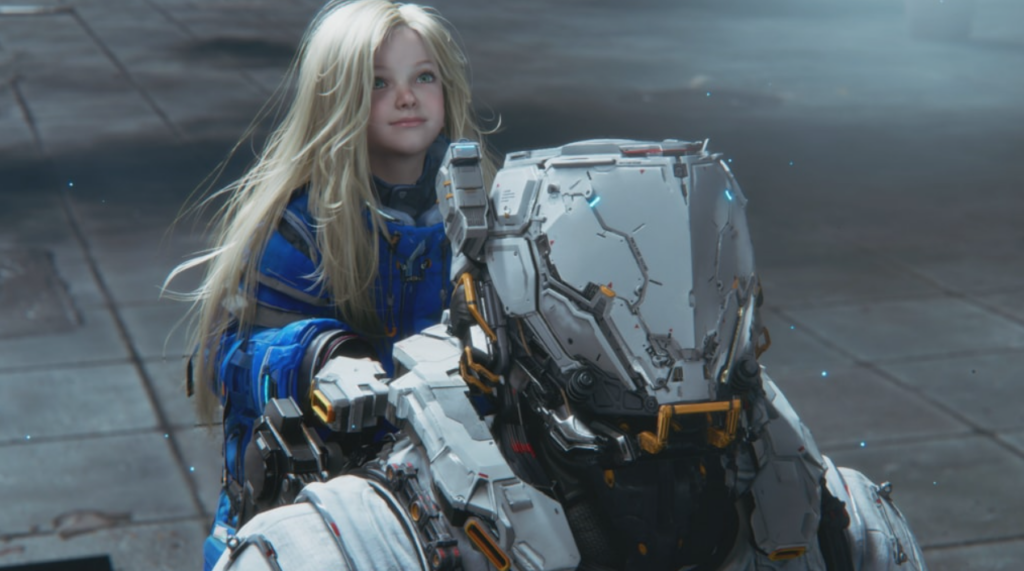
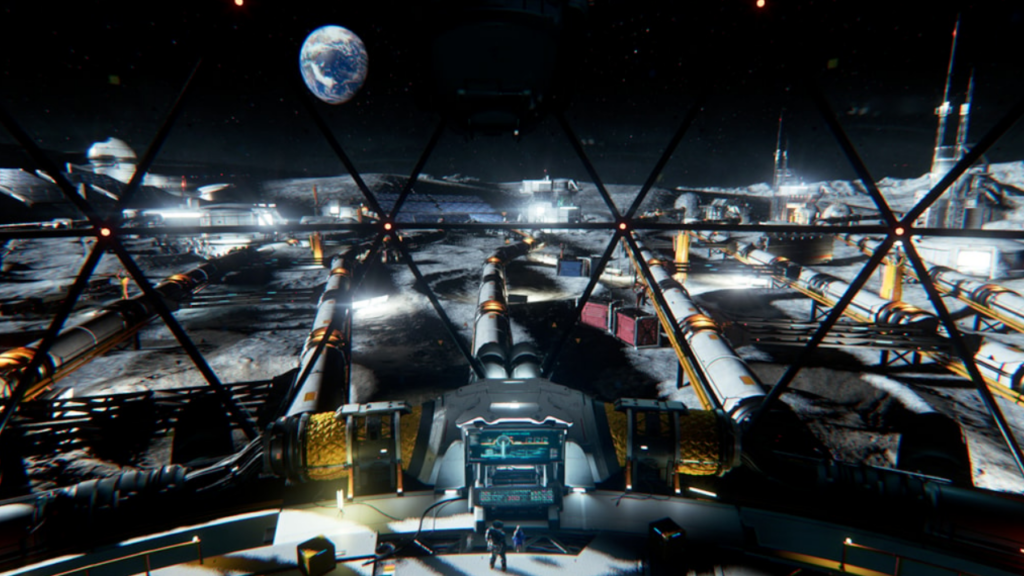
Set in a near-future where the moon has been completely transformed into a massive, automated industrial facility known as The Cradle, Pragmata tells the story of a lone astronaut named Hugh Williams and a mysterious young android girl named Diana.
It’s a game that feels wildly futuristic and surprisingly grounded at the same time, slathered in a highly unique ‘NASA-punk’ aesthetic to create a world that is visually unlike anything else. On the PlayStation 5 Pro, Pragmata acts as a technical showcase of the absolute highest order – and that’s saying something in a period of stellar releases for the console.
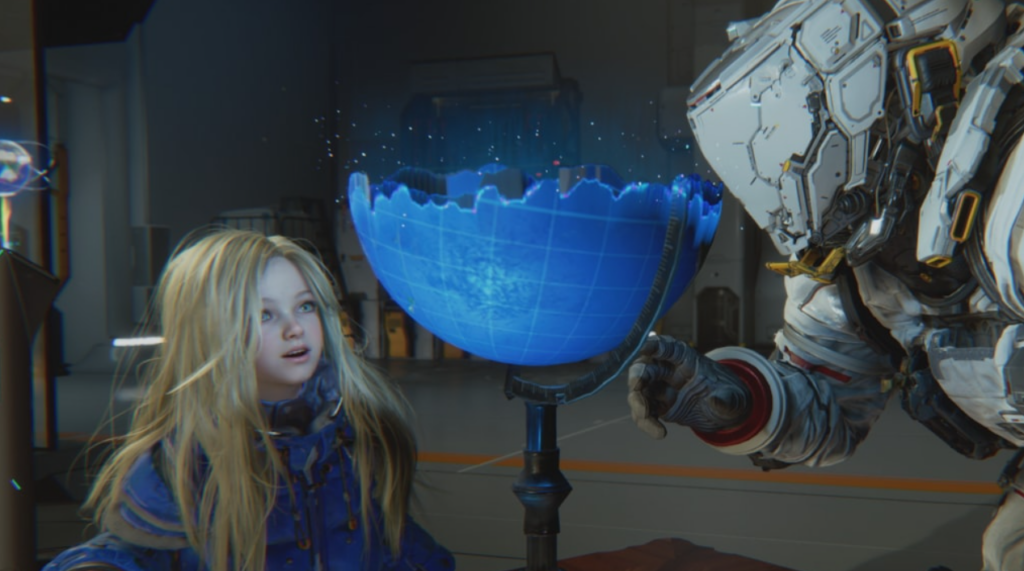
The very core of the entire experience is the evolving relationship between the two main characters – Hugh is a heavily armoured protagonist to ensure Diana’s absolute safety as they cautiously navigate the hostile lunar facility, whilst Diana is an active, highly capable, and essential part of your survival strategy.
Her unique digital abilities allow her to interact with the world in novel ways, creating a collaborative style of play that feels incredibly fresh and constantly rewarding – check out our Pragamata review to find out more!
Story
The narrative structure of Pragmata is undoubtedly one of its most impressive, captivating features, blowing past already high expectations. It successfully manages to find a warm human heart within its heavily industrial setting, as Hugh and Diana’s journey across the moon is filled with moments of mystery that slowly unfold over its eight-to-ten-hour play time.
They frequently encounter hostile, malfunctioning AI constructs and the scattered fragments of a lost lunar society. The story intelligently explores weighty themes involving AI (obviously), the fragility of memory, and what it truly means to be human.
Diana proves to be a deeply fascinating character – an advanced android-human hybrid whose wide-eyed curiosity about the world provides a stark, beautiful contrast to the bleak, mechanical reality of their surroundings. The duo’s dynamic is wholesome and deeply father/daughter in its presentation, providing an emotionally rich core.
Yes, it’s another ‘dad’ game to put alongside God of War and Last of Us, but that’s the company that it deserves to be mentioned around – Pragmata really is that good.
The writing is exceptional throughout the lengthy campaign – carefully avoiding typical sci-fi clichés in favour of a much more personal and emotional tale. The protective bond that gradually develops between Hugh and Diana is surprisingly organic despite hitting a few familiar story beats, making set-piece moments actually feel impactful – sometimes harrowing – and consequential.
The overarching antagonist is IDUS, a rogue artificial intelligence controlling The Cradle. Operating not as a typical, hateful villain, but as a misguided system iterating on human concepts with terrifying, uncanny results, IDUS’s machinations and efforts to stop the pair keep the story moving at a kinetic pace.
While the background lore involving the facility’s collapse is dense and requires a significant amount of reading to fully grasp, the overarching story remains accessible and considered – without venturing into spoiler territory (although many corners of the internet have done so already!), Pragmata’s plot is both a storytelling and gaming highlight for 2026.
Gameplay
The gameplay loop in Pragmata is brilliantly built around the highly innovative Unit Printer system, a mechanic which lends the game an impressive amount of strategic depth and variety.
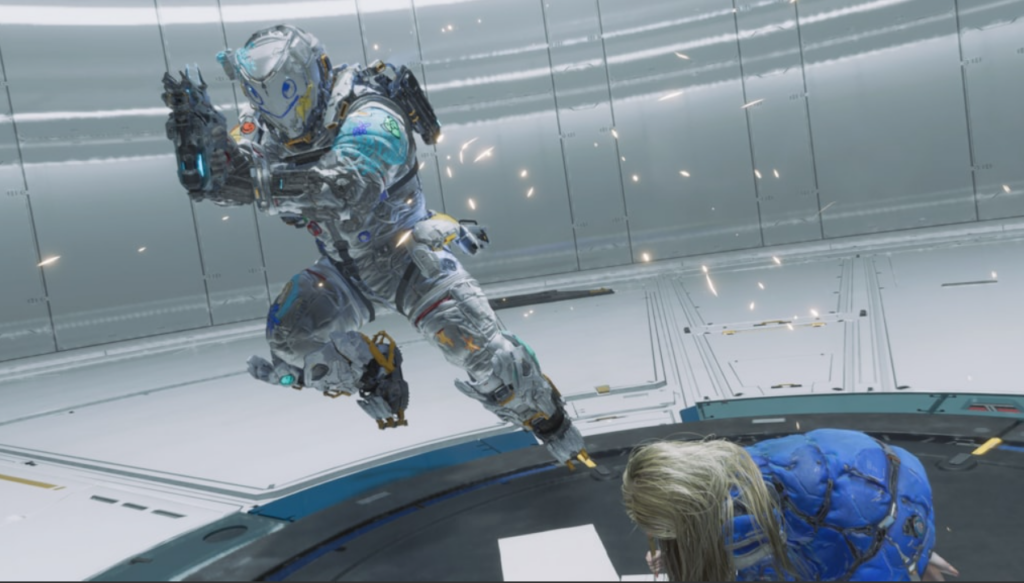
Hugh’s space suit is equipped with a high-speed, integrated printer that can instantly fabricate weapons, tools, and attachments on the fly using lunafilament, a vital resource dropped by defeated robots and scavenged from the environment.
This robust system provides a staggering number of tactical options – there are 16 distinct weapons in Pragmata, all with customisation options and hacking nodes available to unlock. You can print everything from traditional pulse rifles and concussive grenade launchers to futuristic crowd control with decoy generators and high-output shotguns. This extraordinary flexibility allows the player to tailor their loadout to every encounter, with none feeling undercooked or ill-thought-out. Both offensive and defensive play styles are well catered for.
The real, undeniable brilliance of the combat system is the flawless synergy between Hugh’s ballistic shooting and Diana’s digital hacking skills. While Hugh handles the physical, heavy combat, Diana can interface directly with the facility’s vast digital infrastructure, quickly linking with your visor to highlight enemy weak points, as well as actively taking control of hostile drones and turrets to turn them violently against their masters.
Crucially, this happens entirely in real-time during the heat of combat. You might find yourself suppressing a group of heavily armoured robots with a printed heavy machine gun while Diana is simultaneously remotely disabling their energy shields or opening a hazardous steam vent directly behind them. It makes every major battle feel like a complex tactical puzzle that you are actively solving under heavy fire, putting your brain into a flow state as both hemispheres work at full pelt during hectic battle arenas.
All in all, Pragmata manages to deliver fun and dynamic gameplay with more than enough variety – and memorable boss battles, with the Gigantic Bot being a personal highlight – to make replayability a clear plus point.
Audio
The audio design in Pragmata is impressively clean, sharply industrial, and deeply atmospheric. The ambient soundscape of the moon is a carefully constructed mixture of hollow, cavernous echoes, the deep hum of ancient server farms, and the heavy, mechanical clank of Hugh’s armoured space suit.
The musical soundtrack is beautifully ethereal and appropriately space-age, filled with haunting, synthetic vocal tracks and pulsing electronic beats that perfectly match the game’s unique aesthetic. The specific audio cues for the Unit Printer system and Diana’s successful hacks are distinctly clear and highly satisfying, providing vitally important auditory feedback during the game’s more chaotic, visually noisy moments.
The vast, empty spaces of the lunar facility sound appropriately massive and intimidating. Furthermore, every weapon discharge and digital hack possesses a specific, high-fidelity sound profile, making Pragmata as memorable for its sounds as its sights.
Performance
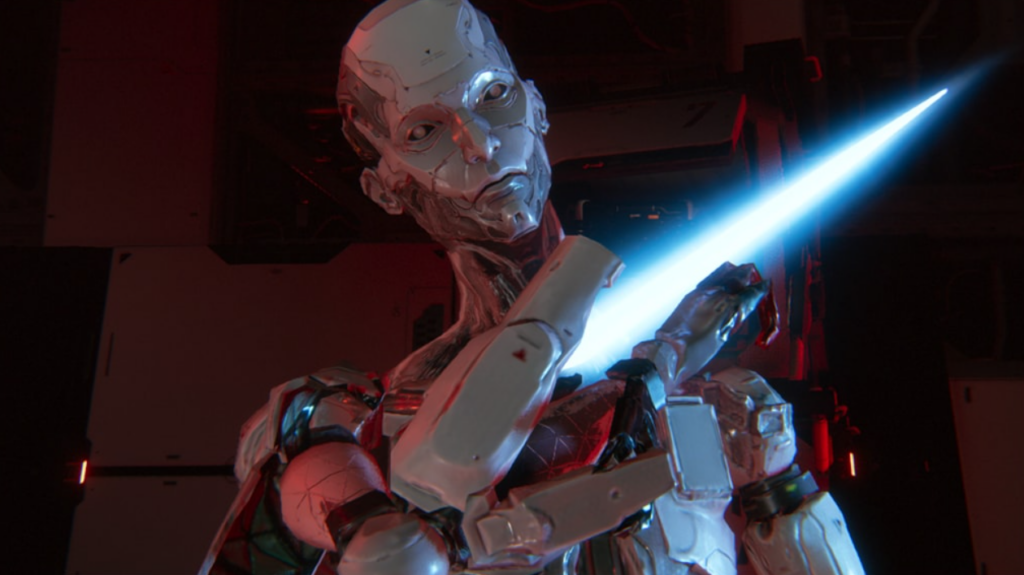
On the PlayStation 5 Pro, Pragmata acts as a stunning technical tour de force. The highly versatile RE Engine delivers astonishing visual fidelity across the board, with both character models and environmental textures easily among the best seen in years.
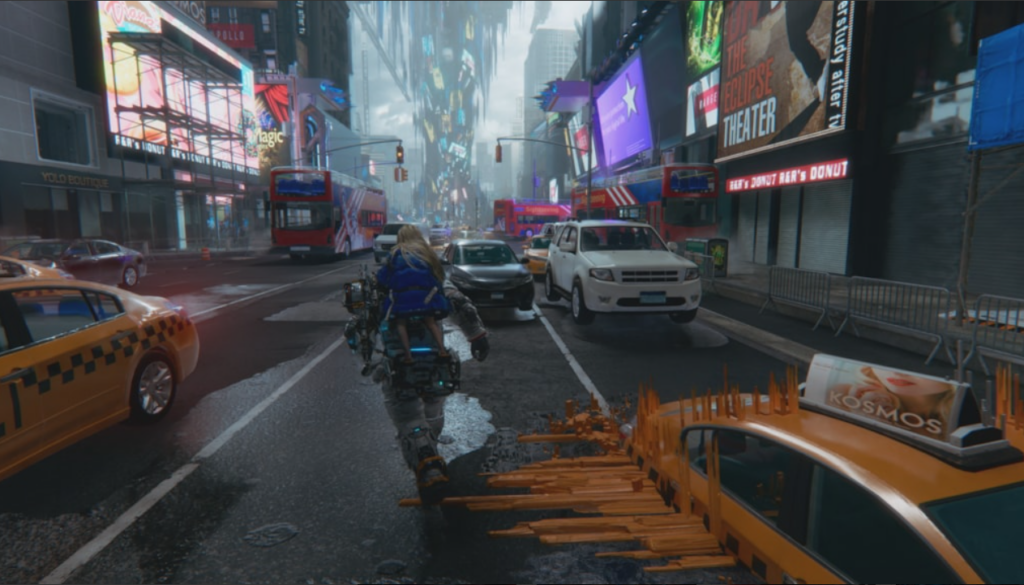
PSSR upscaling technology is expertly used to maintain a remarkably sharp 4K resolution while the game runs at a consistently smooth 60 frames per second. The game’s absolute visual peak arrives during a section explicitly inspired by generative AI, as the duo are tasked with navigating a distorted New York City built within the moon base, where the architecture defies geometry and bright yellow taxis are physically fused into the pavement. It is a wildly maximalist style that completely drops the jaw.
Load times are virtually non-existent when moving between sectors or returning to the Shelter, and this speed allows for a wonderfully seamless transition between the barren moon’s surface and the labyrinthine interior of the facility.
Performance remains rock-solid even when the screen is filled with complex particle effects from Hugh’s various printed weapons and Diana’s digital gadgets. The DualSense integration is also excellent. The haptics and adaptive triggers provide a deep level of tactile immersion that significantly enhances the experience, as players clearly feel the distinct mechanical click and whirr of the Unit Printer system fabricating a new weapon, as well as the heavy, lumbering weight of Hugh’s suit as he navigates the low-gravity lunar surface.
Incredible work here, and entirely worth the wait.
Verdict
At a time of safe sequels and staid IPs, Pragmata is a bold, highly inventive new title that showcases the absolute best of both Capcom’s creativity and technical prowess.
The seamless combination of tactical combat, environmental puzzle-solving, and emotional storytelling makes for a truly unforgettable journey.
The Unit Printer system and the real-time synergy between Hugh and Diana provide a level of mechanical depth that is rarely seen in modern action-adventure games – a unique instance where the dual protagonists’ relationship evolves not just during cutscenes, but actively during moment-to-moment gameplay, testament to the best implementations of their unique dynamic.
On the PlayStation 5 Pro, it is a staggering technical triumph that fully justifies its exceptionally long development time. Pragmata is a beautiful, kinetic and deeply original experience that absolutely should not be missed by anyone seeking a fresh take on the genre – or a fresh take on gaming in general.


