-
Story
-
Gameplay
-
Audio
Summary
Pros
- Definitive offering of two decades of Puzzle Quest
- Match-3 combat still feels smart and highly customisable
- Redrawn artwork and quality-of-life tweaks modernise a classic
Cons
- Clean presentation, but dated by modern RPG puzzler standards
- ‘Cheating’ AI is softened, but still sneaky!
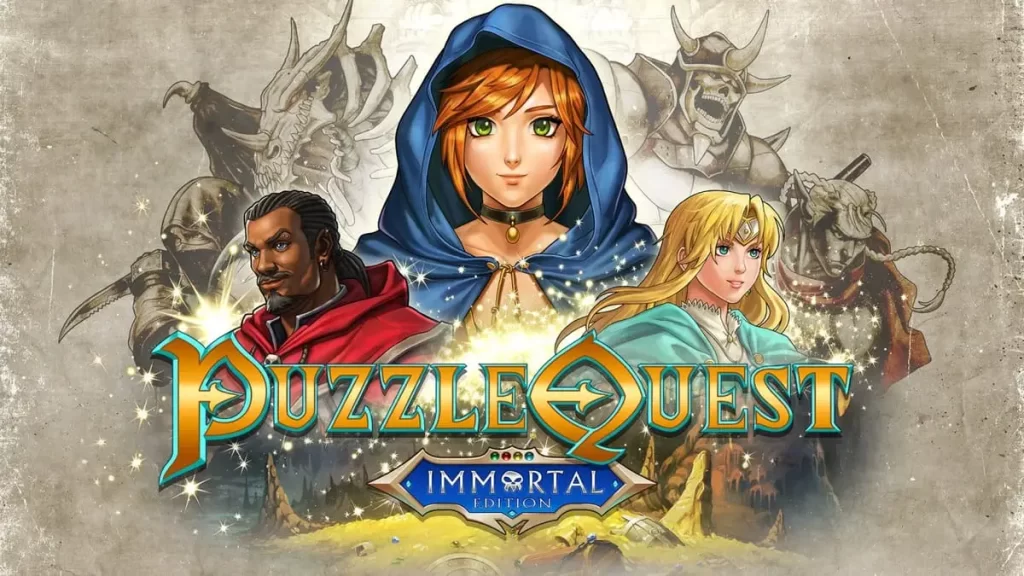
Puzzle Quest: Immortal Edition is developed by Infinity Plus 2 and published by 505 Games, returning to the series that defined the match-3 x RPG mash-up.
Released on all major formats as a remaster of 2007’s Puzzle Quest: Challenge of the Warlords, it gathers the original game, its ‘Revenge of the Plague Lord’ expansion pack and the extra content from ‘The Legend Returns’ into a single slick package.
In terms of additions, it brings a new class as well as dozens of fresh items and fully redrawn artwork suitable for modern, high-resolution screens.
The big question is in a world of world-beating indie puzzlers like Ball x Pit and Balatro, does this loop of gem-matching combat and RPG progression still have what it takes?
Check out our review to find out!
Story
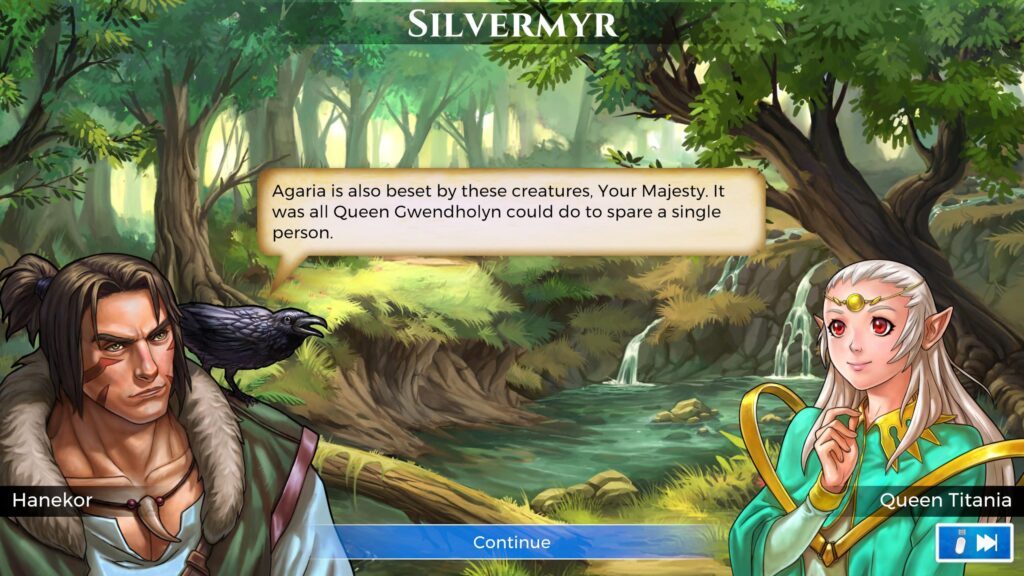
The narrative frame remains largely unchanged from the original release – you’re a budding hero in the world of Etheria, initially running errands and squashing monster problems before being drawn into a wider conflict, involving everything from undead hordes to political machinations.
Immortal Edition stitches the original’s main plot and expansions into a single campaign, expanding both the map and tidily weaving additional questlines into the existing structure.
Writing is brisk and functional with dialogue appearing in short text windows with character portraits, rarely overstaying its welcome.
You accept contracts, chase rumours and confront bosses, each interaction pushing you back to the world map and, more importantly, another battle board.
The tone is classic high fantasy RPG with a slightly knowing wink, full of valiant heroes, scheming villains and a handful of self-aware asides.
What the remaster does particularly well is organisation. Expansion content that once sat apart now feels like a natural extension of the central story.
Optional questlines, side challenges and extra modes are surfaced more clearly, so you are less likely to miss them or to lose track of where you were…oh, and it’s all played as a turn-based match-3 puzzler in the vein of Bejeweled – hence the novelty of Puzzle Quest!
Gameplay
Mechanically, Immortal Edition stays firmly rooted in the rules and patterns of the original from all those years ago.
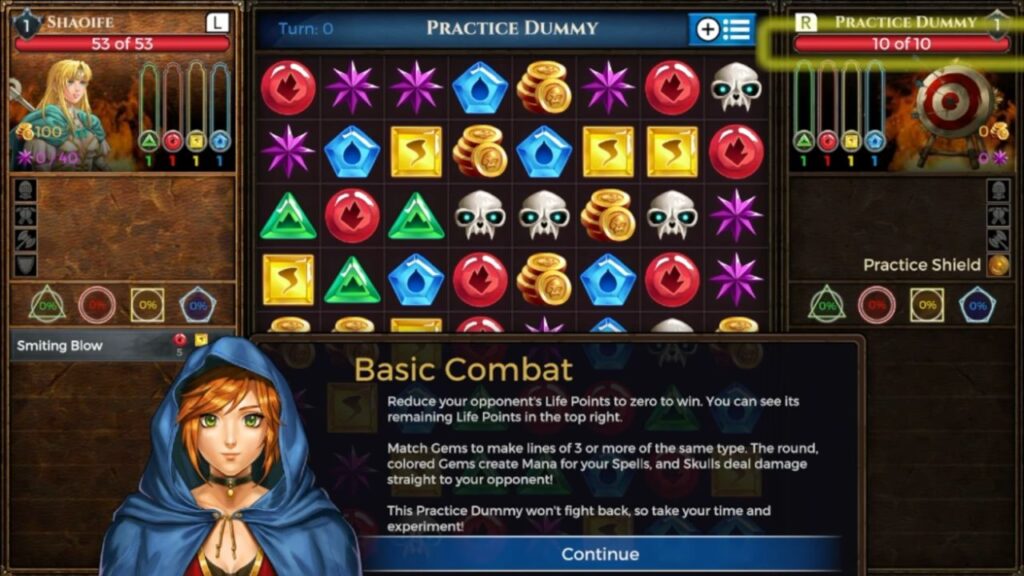
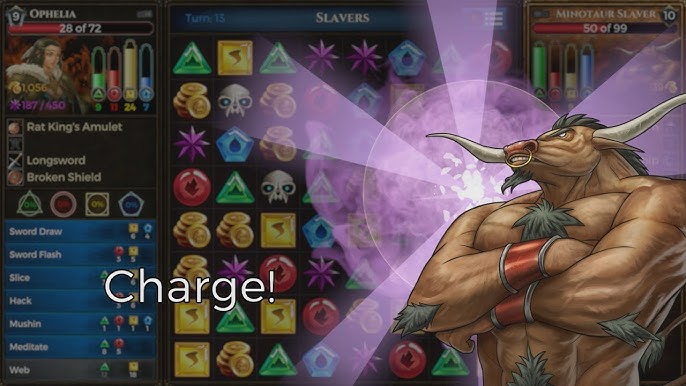
Battles play out on a shared grid filled with coloured mana gems, skulls and special tiles. On your turn, you swap adjacent pieces to make matches of three or more. Matching skulls deals direct damage, while matching colours feeds your mana pools.
You then spend that mana on class-specific spells which can damage foes, manipulate the board, shield you or inflict status effects. Crucially, both you and the enemy pull from the same board, so every move has the potential to set up a lucrative cascade of attacks for either side.
These simple foundations provide the underpinning to a surprisingly deep web of systems. The class-based selection means each character has distinct spell lists that encourage varied playstyles, from control-focused builds that constantly reshape the board to brute-force approaches that stack skull damage.
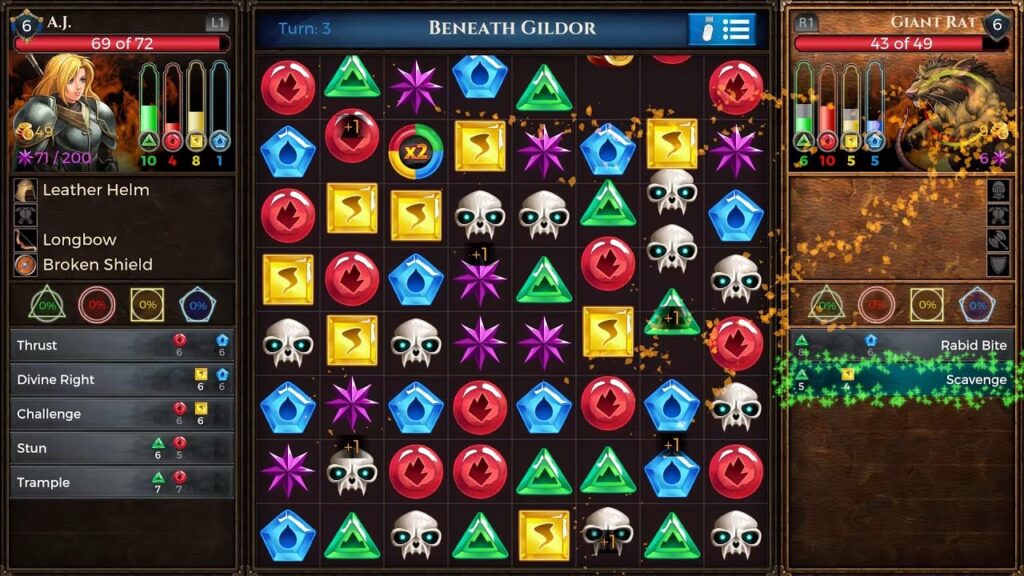
Gear adds passive bonuses and new triggers, companions provide further modifiers, and captured enemies can be researched to expand your arsenal. The Legend Returns content adds even more wrinkles, and Immortal Edition layers a new class – the Swordmaster – as well as rejigs existing ones to offer a well-balanced roster.
The long-running point of contention has always been the game’s devious AI. Many players feel that enemies enjoy suspiciously lucky runs when new gems drop in, leading to accusations that the computer ‘cheats’.
Immortal Edition is not immune from this debate – the developers have been explicit in saying the AI does not have hidden information or modified odds, and recent patches have even toned down how often opponents can chain large combos from off-screen drops, precisely because those moments felt rigged, regardless of the underlying maths.
In practice, perceived unfairness is reduced…but certainly not gone. You will occasionally watch an enemy string together a multi-match turn from a single swap and feel your blood pressure rise. The flip side is that when you engineer a devastating chain yourself, it still feels brilliant. That tension, and the knowledge that your next move could tip the board dramatically, remains a big part of the game’s appeal.
Outside combat, Immortal Edition retains light strategy elements. You can upgrade cities to unlock new options, train and equip companions, capture monsters to learn their abilities, research spells and manage mounts.
None of these systems are especially complex by modern standards, but they provide welcome texture between battles and reinforce the sense that you are building a hero over time.
Audio
The soundtrack leans on orchestral fantasy themes that loop quietly in the background. They are not the sort of tracks you will rush to add to a playlist, but they sit comfortably beneath long sessions without becoming distracting. Different regions and key story beats get slightly varied motifs, giving a gentle sense of place.
Sound effects are crisp and informative. Gem matches chime pleasantly, skull hits land with a satisfying crack, and spells have distinct audio signatures that make it easier to track what has just happened in a busy turn. Given how much of the experience involves staring at a static board, audio feedback is vital for keeping the flow engaging.
Voice work is minimal, mostly limited to interface barks and the odd stinger. It underlines actions rather than driving the storytelling, which fits the series’ roots.
Performance
Technically, Puzzle Quest: Immortal Edition is light on requirements but thoughtful in its update. All the original assets have been redrawn or cleaned up for HD and 4K displays.
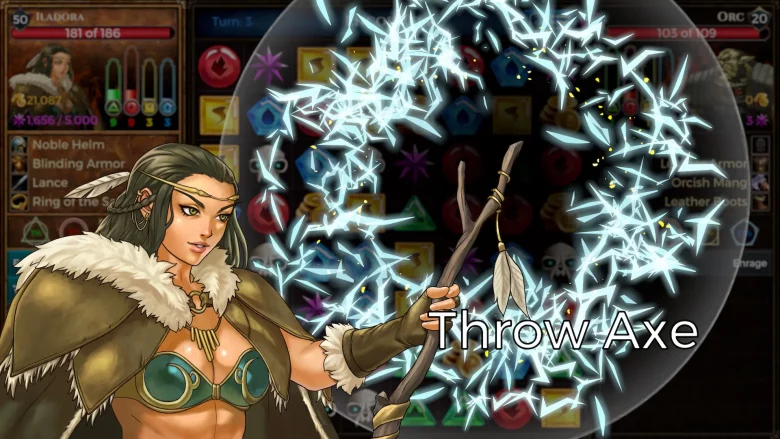
Gems now have distinct shapes as well as colours to aid accessibility, character portraits are sharper and environmental art on the world map reads more cleanly. The overall presentation still has the feel of a mid-2000s game at heart, but viewed through a much clearer lens.
On a modern PC, performance is effectively a non-issue. Load times between the world map and battles are short, the interface scales nicely to different resolutions and even very modest hardware has no trouble running the game smoothly.
Options menus focus more on animation speed and input preferences than on graphics sliders, which makes sense given the underlying design.
There have been some complaints levelled at the new visuals feeling a bit over-smoothed or plastic-y compared with the original’s grittier look, with some speculating about AI-assisted art.
There is no confirmation from Infinity Plus 2 or 505 that any generative tools were used, and official messaging simply denotes the assets as redrawn for modern resolutions. The more concrete criticism is that, stylistically, the art is functional rather than delivering a radical improvement, where preference is likely to depend on individual taste and degree of nostalgia.
Verdict
Puzzle Quest: Immortal Edition on PC is a respectful restoration of a stone-cold classic. Infinity Plus 2 and 505 Games have pulled together nearly twenty years of content, sharpened the presentation, added a handful of sensible tweaks and presented the whole package in a way that feels at home on current hardware – making this perfect for the Steam Deck.
The core loop of out-thinking opponents on a shared match-3 board while sculpting a personalised hero remains as compelling as ever, and few modern games have matched its particular blend of puzzle tension and RPG tinkering.
At the same time, the age of the design shows. The campaign is long and occasionally grindy, the story is transparently a delivery mechanism for more battles, and even with tweaks the AI will sometimes feel like it has stolen a win. The visual refresh makes the game easier on the eyes, but does not disguise its roots.
For newcomers, this is easily the best way to experience Puzzle Quest. For returning fans, value will depend on how keen you are to revisit familiar quests with cleaner art and a bit of extra content.
Where that sits on your buy list will largely come down to how much fondness you have for lining up three gems in a row, and hoping the next drop is in your favour…


