-
Story
-
Gameplay
-
Audior
-
Performance
Summary
Pros
-
Combat that is lightning-fast, responsive, and deeply rewarding
-
Gorgeous pixel art packed with cinematic flair
-
Hypercharge mechanic adds tactical depth and excitement
-
Hard Mode remixes levels and keeps the challenge fresh
Cons
-
Campaign is short at six to eight hours
-
Upgrade system lacks depth and build variety
-
Minor bugs and occasional visual clutter affect clarity
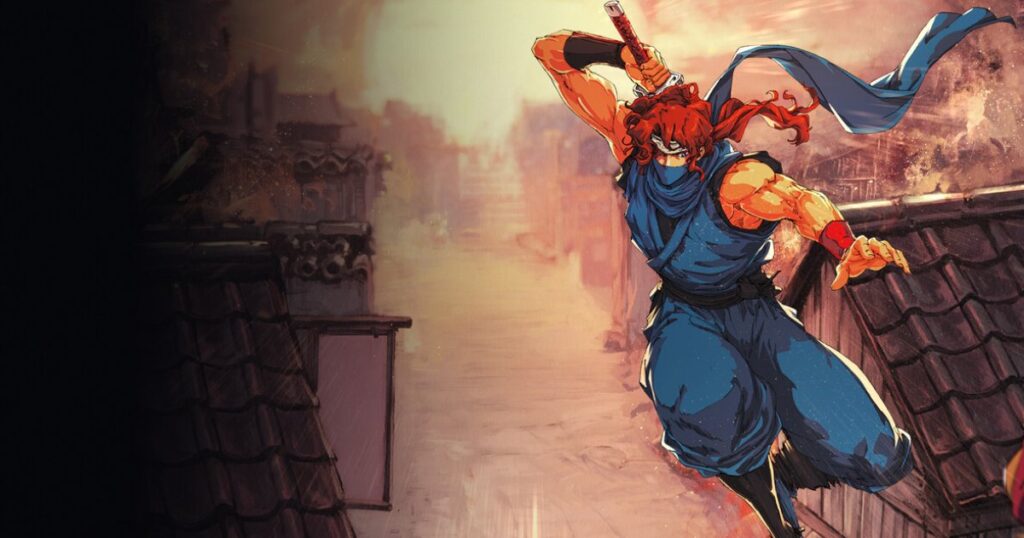
The seminal Ninja Gaiden series slices back into the spotlight with style, precision, and a refusal to compromise with Ragebound, a 2D action platformer that delivers skill-based gameplay wrapped in a lavish retro-modern aesthetic.
Developed by The Game Kitchen (of Blasphemous fame) and published with the support of Dotemu and Koei Tecmo, this surprising sequel is relatively lean in runtime, but rich in moment-to-moment satisfaction. When Ragebound is in full flow, it feels unstoppable, pulling you into a trance of precise strikes and flowing movement that more than earns the right to stand up as an entry in the lauded franchise.
Story
It is not a complex tale, but it serves its purpose elegantly.
The story stays true to Ninja Gaiden’s tradition of putting gameplay above elaborate plotting, but let’s remember that the sequences in the NES original were some of the first cut-scenes ever, so story does certainly count for something.
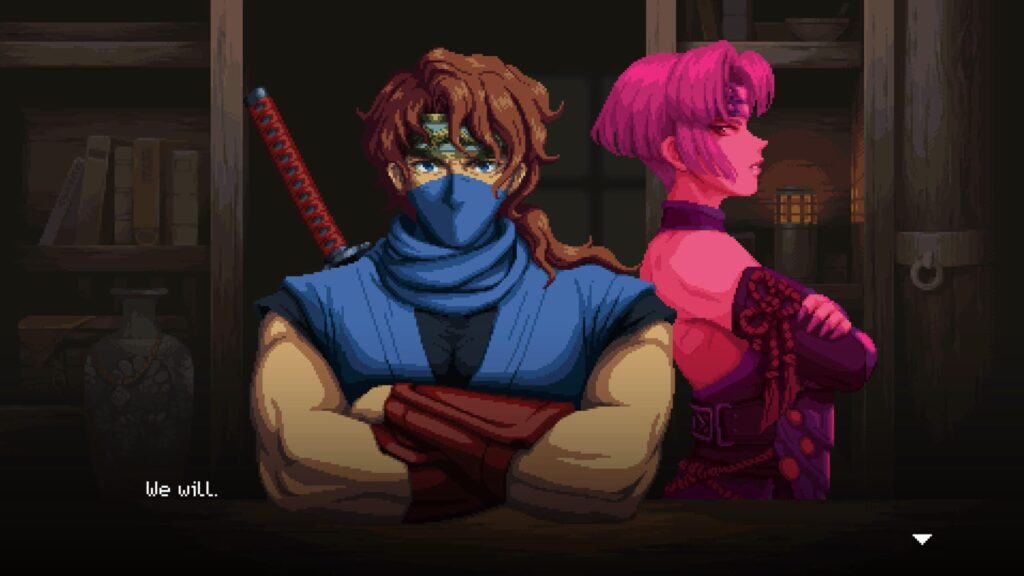
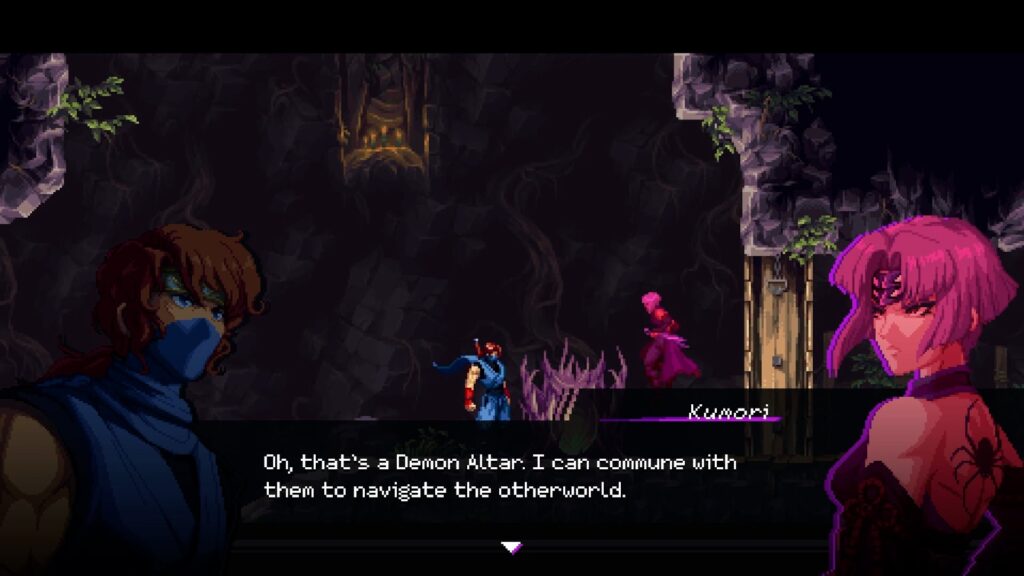
When a demon invasion hits Hayabusa Village, fledgling shinobi Kenji Mozu steps up to defend it in the absence of his master, Ryu Hayabusa. The young ninja soon crosses paths with Kumori, a kunoichi from the rival Black Spider Clan. Their unlikely partnership leads to a fusion of powers, setting the stage for a showdown against the resurrection of an ancient Demon Lord.
The narrative is concise, moving quickly between stages and keeping the action front and centre. Cutscenes are short, with functional dialogue and stylish framing that recall classic anime – the relationship between Kumori and Kenji does take some amusing turns – while recurring characters help maintain a sense of progression across the journey.
Gameplay
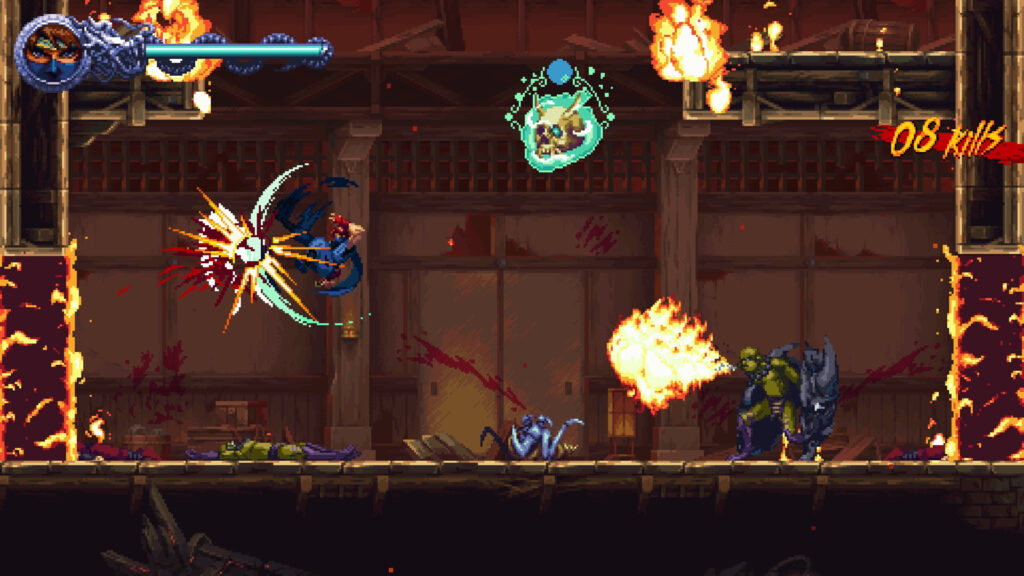
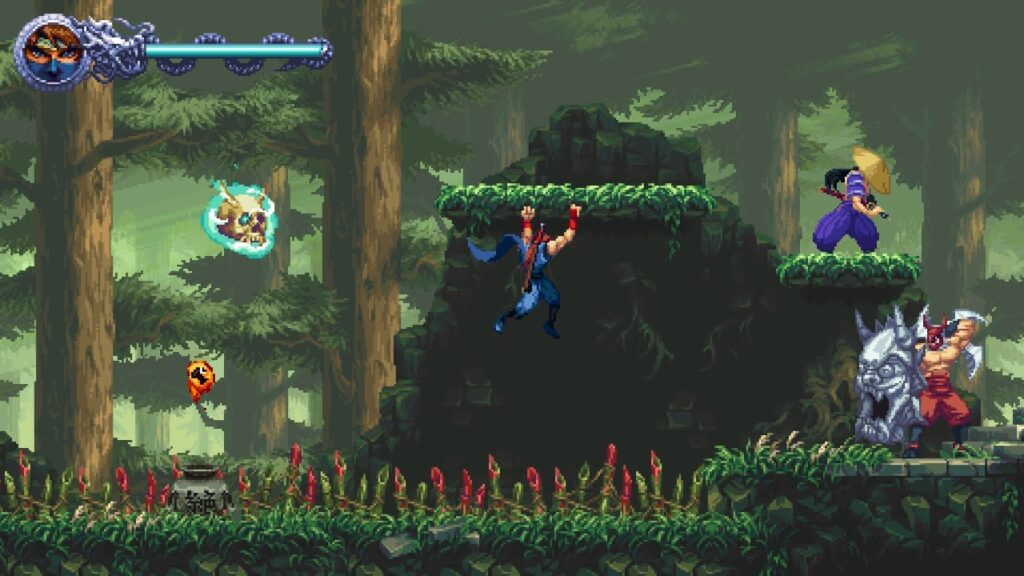
At its heart, Ragebound is a pureblood Ninja Gaiden at its core, and is all about mastery. Kenji’s move set is small, but focused and endlessly expressive. The katana slash forms the backbone of your offence, the Guillotine Boost doubles as both an aerial attack to chain combos as well as a traversal tool, the dash gives you speed and positioning, whilst the dodge roll lets you slip through danger with pinpoint timing.
Every move in his arsenal has both weight and purpose. The katana slash feels sharp and responsive, the Guillotine Boost delivers satisfying control in the air, the dash offers reliable gap-closing, and the dodge roll rewards precise timing.
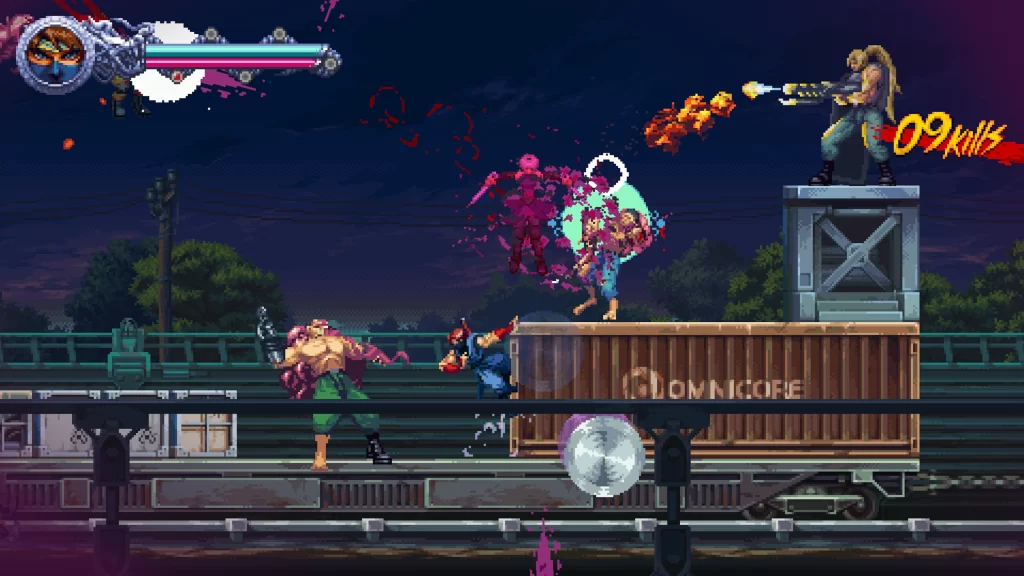
The Hypercharge mechanic is what ties the combat loop together, however. Matching the right attack to the right enemy colour floods the screen with energy and grants a one-hit kill potential. It adds an extra layer of decision-making to every fight, encouraging calculated risks to maximise efficiency.
Enemy variety ensures you never coast. Standard foes keep the rhythm, but shielded soldiers, ranged attackers, and teleporting assassins will punish any lapse in focus. Boss battles are highlights, with each encounter built around unique patterns and cinematic presentation.
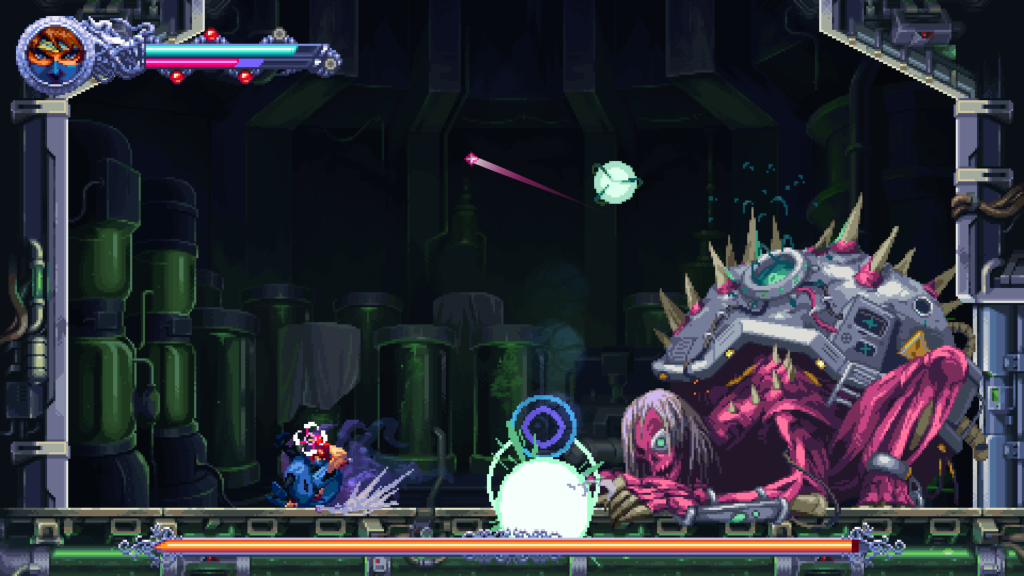
Platforming is as finely tuned as the combat. Levels encourage chaining movement abilities into smooth sequences, using wall runs, aerial attacks, and enemy bounces to clear hazards. Maintaining momentum feels rewarding and tests both precision and awareness.
Hard Mode ramps things up to evoke memories of the NES version once again – altering enemy placement, increasing aggression, and changing attack behaviours, creating what feels like an alternate version of the game. For players who master the main campaign, it offers a fresh and genuinely challenging second run.
One notable shortfall, however, is the sense of progression in character skill. Upgrades exist, but they are conservative in design, focusing mostly on minor health boosts, stamina tweaks, or incremental weapon enhancements. These additions are helpful but rarely feel transformative. You unlock them, nod in approval, and carry on playing exactly as you did before.
There is merit in this approach. By keeping Kenji’s core move set intact from start to finish, Ragebound ensures the spotlight stays on player skill rather than character stats. The satisfaction comes from mastering timing, spacing, and awareness, not from stacking bonuses.
It keeps the game lean and primarily skill-based, true to the Ninja Gaiden ethos.
That said, some players will wish for more variety. Alternate weapons, branching ability paths, or even cosmetic rewards could have given long-term play a greater sense of personal expression. Without them, the campaign risks feeling front-loaded.
You learn the essentials early on and spend the rest of the game refining, rather than evolving, your style. For purists, this simplicity may be welcome, but it felt to me like a missed opportunity to deepen the experience.
Audio and Performance
Visually, Ragebound is exceptional. The pixel art is crisp and richly detailed, and each stage has a distinct personality that keeps the world engaging. Boss sprites are large and animated with expressive detail. Attacks feel heavy and purposeful, and visual effects are strong without overwhelming clarity.
The soundtrack is a standout. Composed by Sergio de Prado with contributions from original Ninja Gaiden composers Keiji Yamagishi and Ryuichi Nitta, it blends traditional Japanese instrumentation with modern synths for an eclectic, if slightly more serviceable than memorable selection of tunes. Tracks are tightly matched to the action, rising in intensity during boss fights and softening in quieter interludes.
Sound effects deliver clarity and impact. The clash of steel, the thud of a perfect strike, and the crackle of Hypercharge activation all enhance the sense of control. Ambient audio such as wind, distant bells, and murmured crowd noise adds depth to the setting, without distracting from the gameplay.
Minor issues do exist from a performance perspective, which are particularly apparent as this game is so exacting in what it asks of you. Beautiful, yet busy backgrounds can occasionally make hazards harder to read, and rare platform clipping can cause unexpected falls.
Final Verdict
Ninja Gaiden: Ragebound is a confident return for one of gaming’s most demanding franchises. It is fast, stylish, and focused on the fundamentals, offering an experience that values skill and precision above all else.
It is short, and the upgrade system could have been expanded, but these are small flaws in a game that delivers such a consistently satisfying loop. Every slash, dodge, and counter feels earned, and the replay value for those chasing mastery is significant.
It offers a pure, uncluttered slice of action platforming. For those familiar with the NES originals – or even the Xbox instalments first time around, it is a worthy revival. For newcomers, it is a demanding – but fair – introduction to the series’ trademark difficulty.
Code supplied by publisher for review.


