-
Graphics
-
Gameplay
-
Audio
-
Progression
Summary
Pros
- A meticulously polished visual design.
- Remarkably forgiving rubber banding.
- Robust Track Builder, expansive roster, and class-swapping flexibility add welcome depth to exploration.
Cons
- The world feels devoid of life compared to modern open-world peers, leading to a grindy late-game progression.
- Co-operative multiplayer is restricted solely to isolated races rather than the main campaign.
- Lengthy load times when starting races or travelling between zones.
The Hot Wheels die-cast franchise has a peculiar gravitational pull – just when players might think they have exhausted the plastic circuits of the Unleashed series, Milestone returns to the track with a brand new entry.
Based in Milan, the Italian development studio has a storied racing pedigree dating back to the iconic 1995 PC arcade classic Screamer (as well as the recent anime-tinged reimagining).
Decades later, they are channelling that same high-octane expertise into Hot Wheels Infinite Rush, shifting gears into a sprawling open-world format, and channelling the free-roaming ambition of modern driving games into a vibrant, highly polished package.
Retailing digitally in the UK at £44.99 for the Standard Edition, £69.99 for the Deluxe Edition, and £89.99 for the Ultimate Edition – which notably grants players a three-day early access period – this is a gorgeous and fundamentally sound sandbox that bridges the gap between bedroom nostalgia and modern hardware capabilities.
The title feels remarkably fresh, serving as a brilliant playground for newcomers and a deeply satisfying nostalgia trip for veteran collectors.
Structure
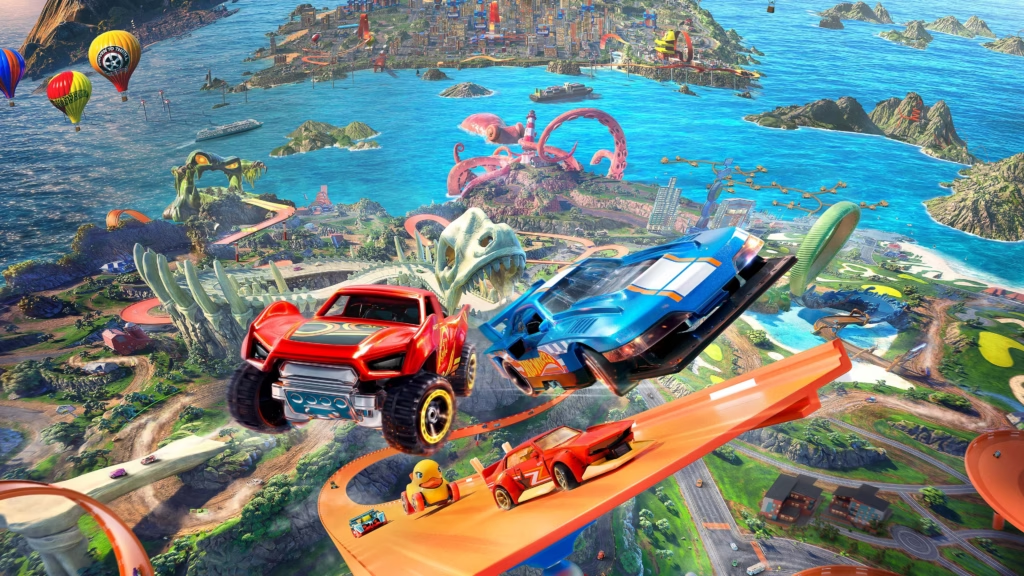
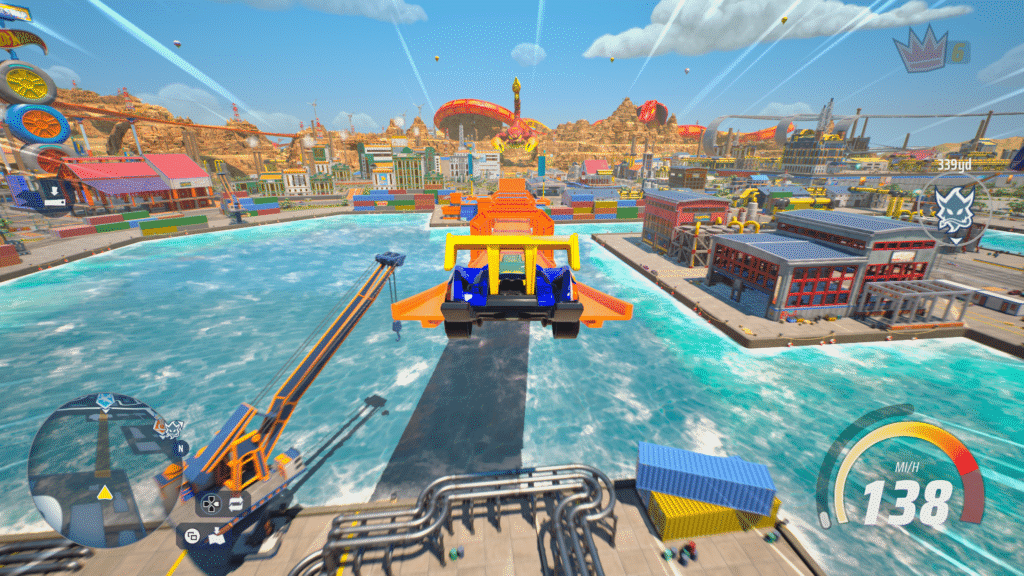
The narrative framework provides a charming excuse to explore a massive plastic playground. The world is divided across four distinct islands, beginning in the bustling metropolis of Wheelswood before expanding into biomes like the remarkably tranquil Tentacle Bay, the industrial excavation sites of Gearville, and the neon-soaked Drifty Temples.
The structural design clearly evokes shades of Forza Horizon and The Crew: Motorfest with its heavily stylised feel, and even incorporates GTA V-style overhead camera zooms when initiating Daredevil races.
However, a significant difference between Infinite Rush and those open-world heavyweights is how utterly devoid of life the playsets feel. While there is certainly no shortage of stunts to execute or photo spots to find over time, the environments lack dynamic energy. If other drivers were roaming the map – even as simple ghost vehicles – it would inject some much-needed vibrancy into a world that can unfortunately become a bit stale during extended sessions.
Once you have fully unlocked all four islands, the progression reveals a slightly grindy nature – hoovering up hundreds of hidden gears per region quickly transitions from exciting discovery to a formulaic checklist, stalling initial momentum.
Gameplay and Customisation
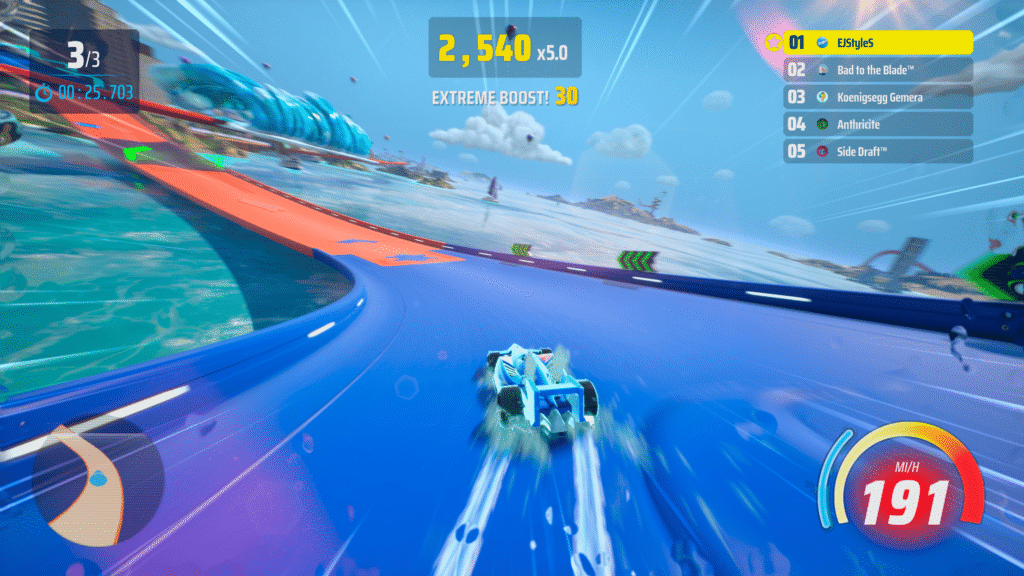
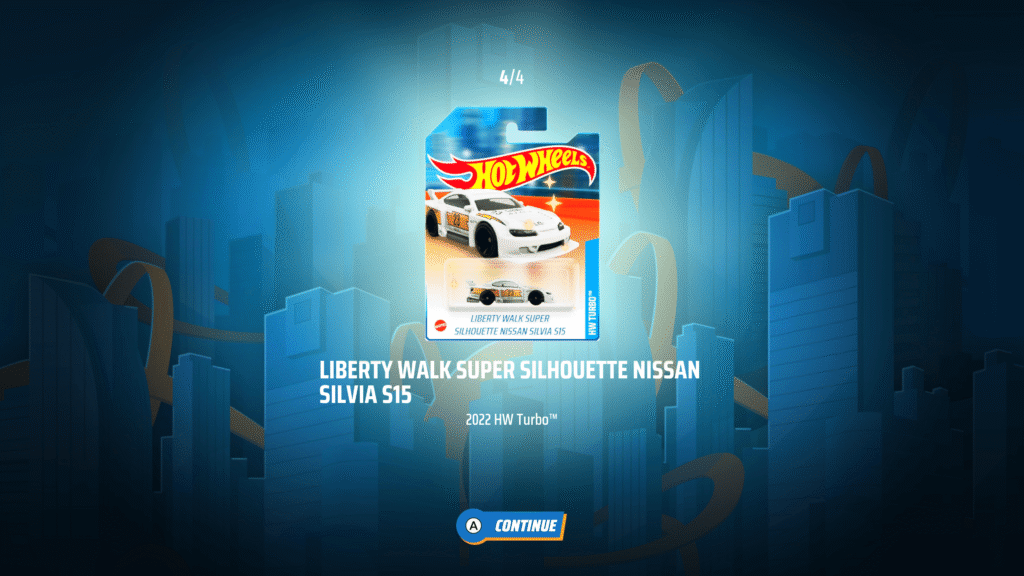
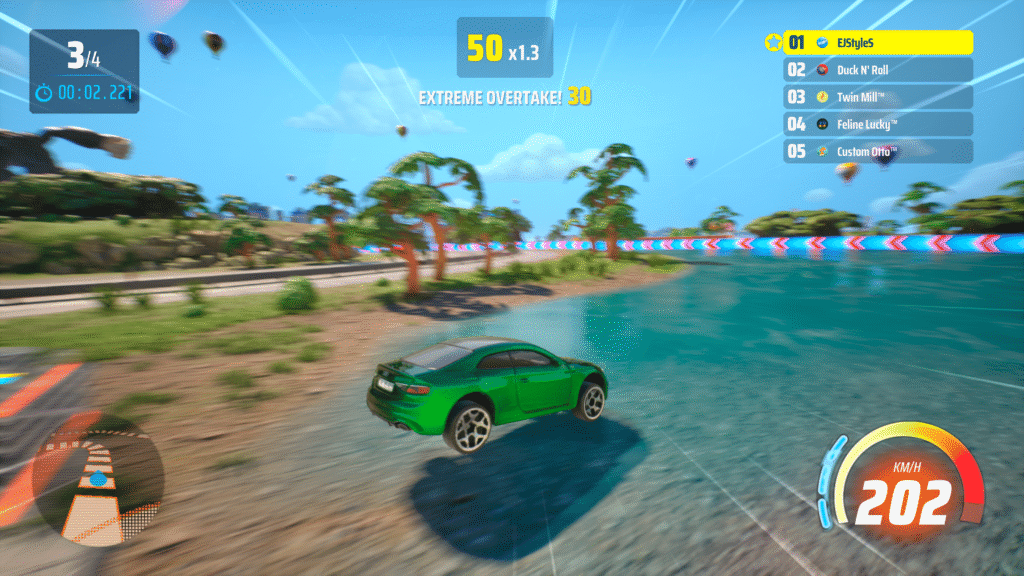
On the tarmac, Infinite Rush delivers unabashedly fast arcade racing mixed with ingenious customisation. The game launches with a catalogue of over 150 vehicles, blending licensed real-world models from manufacturers like Mazda and Nissan with classic Hot Wheels originals. The arcade handling is meticulously tuned, providing a deeply satisfying sense of weight and control.
The roster is categorised into four distinct classes: Versatile, Speeder, Drifter, and Titan. Players equip one from each class and can swap between them on the fly while out in the open world. This seamless transition allows you to immediately tackle unexpected challenges with the right tool for the job.
Beyond simply swapping vehicles, the game introduces a satisfying layer of mechanical depth through its attribute add-ons. As you level up, you unlock up to four perk slots per vehicle. These allow you to equip specific modifiers to tweak a car’s base attributes, boosting crucial elements like handling, boost capacity, or top speed.
Complementing this mechanical depth is a robust visual customisation suite, allowing players to design bespoke liveries and manipulate those signature metallic paints to their exact specifications.
Crucially, Milestone has addressed a major grievance from their previous efforts by dialling back the AI rubber banding. Opponents no longer magically catch up during the final stretch of a flawless race. This fair scaling makes the title remarkably enjoyable for younger players, ensuring that kids can actually enjoy competitive events without facing cheap, frustrating defeats at the finish line.
However, the inability to adjust the difficulty setting once a race has actively started is a frustrating oversight. It frequently meant quitting out and navigating back through menus to ensure there was enough of a challenge for myself, before diving back in to add the virtual stabilisers of auto-acceleration or turning assists when younger gamers wanted a go.
The competitive races themselves operate within tailored sections of the open world. These curated routes serve as excellent methods for learning the intricate maps. While they offer exciting glimpses of outlandish jumps, massive loops, and upside-down racing, the official track designs feel strangely restrained.
For a title that could be completely unfettered in designing the craziest gravity-defying circuits, the developer’s routes remain surprisingly conservative.
Fortunately, this restraint is entirely offset by the returning Track Builder function. Players can construct custom routes using iconic physical playset pieces, snapping together their own chaotic loops, launchers, and giant shark jaws with intuitive controls. The tool translates bedroom floor constructions into a polished digital format seamlessly, allowing you to build elaborate, unfettered circuits across the open-world map and share them online with the community.
Multiplayer and DLC
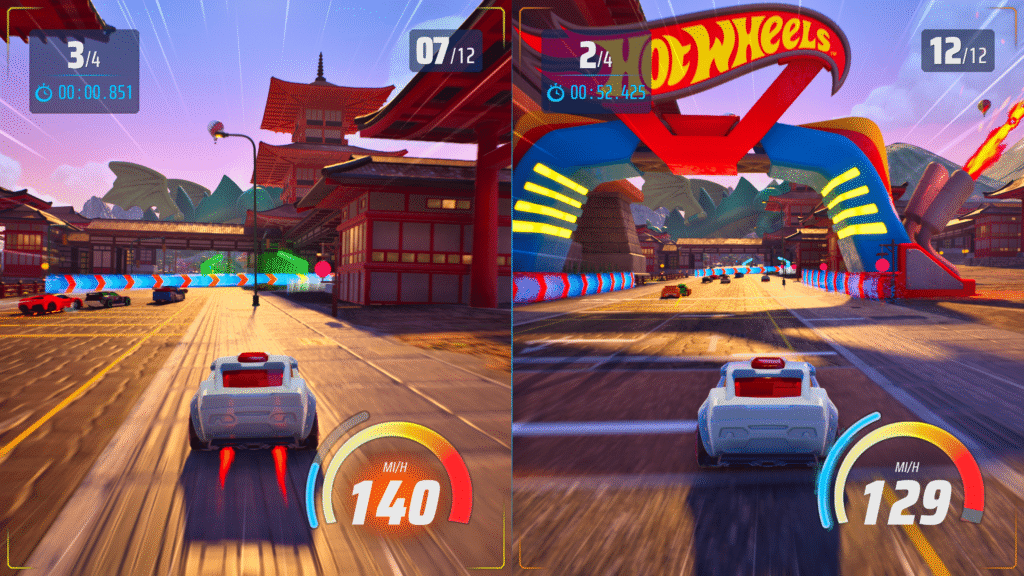
Taking your garage online is where the title finds its longevity. The multiplayer components are robust, offering generous local split-screen options alongside comprehensive online lobbies. Racing against friends in custom-built arenas highlights the chaotic fun of the physics engine. It is a genuine shame, however, that co-operative play is strictly limited to these isolated races and does not extend to the main progression mode. Being unable to explore the open world or tackle the campaign alongside a friend feels like a missed opportunity.
Furthermore, this strong foundational package is accompanied by a sheer deluge of DLC and a tiered pricing structure that demands attention.
Players wanting the 44-car Vehicle Pass must opt for the Deluxe Edition, while the most prominent addition is locked behind the Ultimate tier. This top package includes the premium Ferrari Expansion Pack, which adds a dedicated Isola Ferrari map and eight legendary vehicles, including the F40 Competizione and the Testarossa – with all content out by October 2027.
While the quality of this additional content is undeniable (although not available to objectively state at the time of review), partitioning such significant automotive icons behind a near-£90 paywall feels exceptionally aggressive for a family-focused title.
Audio and Performance
Acoustically, the game leans on an original score rather than a licensed soundtrack. The tunes initially come across as somewhat generic electronic dance music, though they possess a strange, undeniable pull that burrows into your head after extended play.
The sound design team has captured the specific tactile noises of the toys brilliantly, with the clack of plastic tyres hitting bright orange track pieces feeling entirely authentic.
However, the environmental audio mixing requires adjustment – thein-world reverb applied to the music when driving through tunnels is incredibly overwhelming, albeit thankfully brief!
As a showcase for the Xbox Series X, the visual fidelity is exceptionally clean, a crisp bolstered with a silky 60 frames per second.
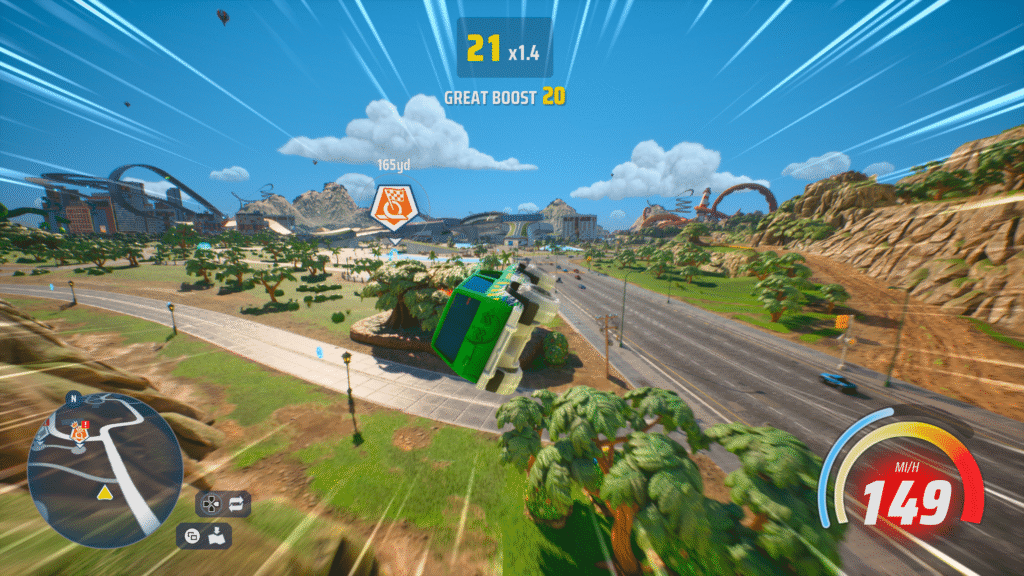
Milestone has implemented a brilliant tilt-shift graphical effect that successfully sells the illusion of navigating a miniature world. Up close, the sheer attention to detail is staggering. The metallic paint flecks, the tiny moulding seams, and the authentic plastic sheen of the cars transform these digital assets into tactile, realistic toys.
The vibrant art direction is supported by solid frame rates, maintaining perfect stability even when the screen is filled with multi-car collisions and destructible debris. However, the game does suffer from noticeably lengthy load times. Whether you are initiating a quick Daredevil race or simply fast-travelling between the four different zones, you are frequently left waiting at a static loading screen. This pacing issue ultimately interrupts the blistering speed that defines the rest of the title.
Verdict
Carrying a family-friendly rating, this modern racer successfully expands the beloved toy franchise into a massive open-world setting. *Hot Wheels Infinite Rush* is undeniably a very faithful homage to physical play, scaled up with impressive technical competence.
For players seeking a deeply technical driving simulation, the forgiving physics might lack long-term bite, and the late-game grind certainly tests your patience. Yet, for those willing to dive into a colourful sandbox, the snappier controls, jaw-dropping graphics, and massive vehicle roster make it an absolute triumph. Milestone has treated the franchise with the utmost respect, delivering a title that is polished to a mirror sheen.


