-
Graphics
-
Gameplay
-
Story
-
Audio
Summary
Pros
- Brutal, expressive combat with a hugely expanded arsenal
- Atsu’s revenge tale is darker, sharper and more personal than Tsushima
- Ezo is a stunning open world with powerful use of PS5 features
Cons
- Open world structure still leans on familiar checklists
- Pacing wobbles if you chase every marker between main story beats
- Visual detail is uneven when you look past the exquisite vistas
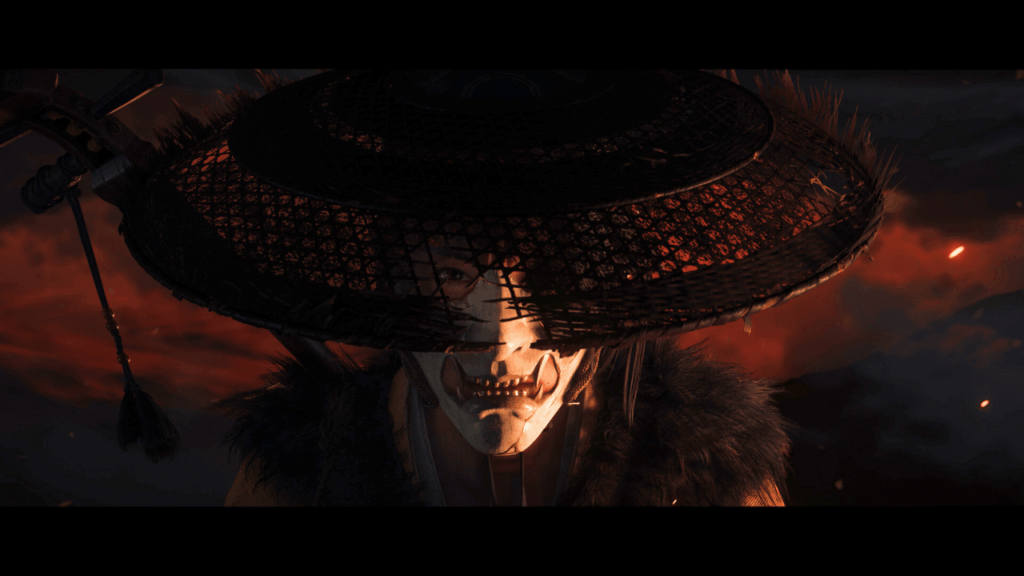
Ghost of Yōtei is one of those sequels where the brief feels obvious. Take everything Sucker Punch learned from Ghost of Tsushima (which we loved), move the action north to Ezo under Mount Yōtei, and build a sharper, meaner samurai revenge story around a new protagonist.
Set in 1603 and built as a native PS5 title with PS5 Pro enhancements, this standalone follow-up swaps Jin Sakai’s crisis of conscience for Atsu, a lone mercenary who has long since made peace with being the monster in someone else’s folktale.
The result is an open-world action adventure that will instantly click with anyone who roamed Tsushima, but there are enough mechanical and tonal shifts for Yōtei to stand on its own.
The swordplay is nastier, the world is wilder, and the line between ghost story and historical drama blurs in ways that suit the northern setting. Rather than trying to reinvent everything, the game refines and deepens the template, and on both PS5 and PS5 Pro it leans hard into cinematic presentation and DualSense-driven immersion.
From the first hours, it makes an incredibly strong initial impression. Combat builds on Tsushima in smart ways, giving Atsu a broader, more expressive arsenal and replacing the stance system with something more tactile and readable.
The story hits many familiar revenge beats but plays them with a darker, more personal edge. The open world, meanwhile, is full of exquisite vistas, reactive weather and a strong sense of place.
The downside is that the underlying structure still leans heavily on familiar checklists, and if you treat every icon as mandatory, the pacing can sag. With that caveat in mind, this is still one of the PS5 catalogue’s standout first-party exclusives – find out all the details in our Ghost of Yotei review.
Story
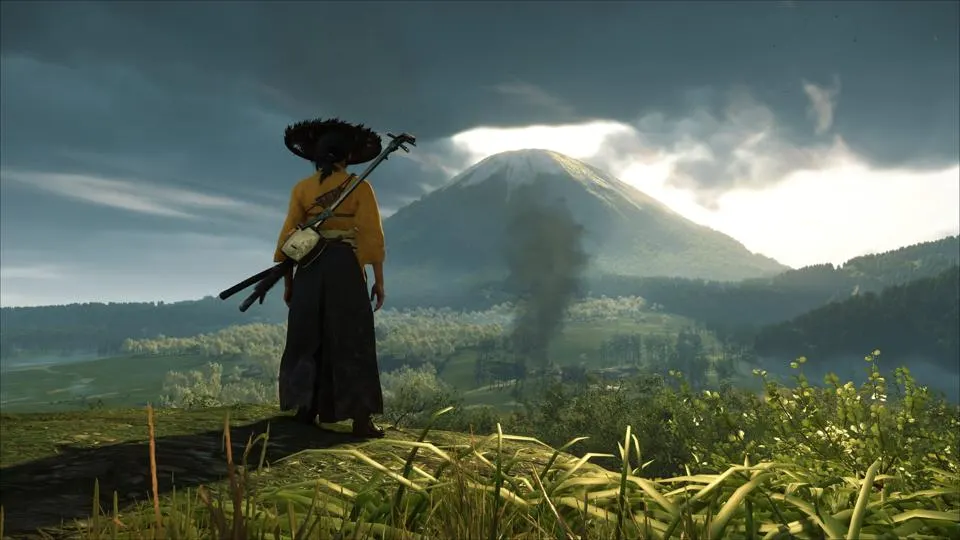
Ghost of Yōtei opens with a nightmare and a massacre. Sixteen years earlier, Atsu’s family home at the foot of Mount Yōtei was attacked by a group of masked samurai. She remembers flames licking up the ginkgo tree in the courtyard, remembers the six figures who butchered everyone she loved, and remembers waking pinned to that burning trunk with her father’s katana through her shoulder. Those men become the “Yōtei Six” in local legend. For Atsu, they remain a list of names and faces to erase.
In the present day she is a bounty hunter and blade for hire, drifting through Ezo with a battered cloak, a scar that runs like a fault line across her back, and a reputation that has already seen her likeness printed on wanted posters. When a new lead surfaces on Lord Saito and his lieutenants, she heads north and the game finally lets you steer. Structurally, it is a straightforward revenge tale: six lieutenants, one architect behind them, and a long road of bodies between here and closure.
The twist lies in scale and perspective. Tsushima was the story of a nobleman caught between ideals and necessity. Yōtei centres on someone who abandoned that framework long ago. Atsu is introduced as a blunt instrument, closer to a wandering horror than a knight, and much of the story is spent testing whether anything of the person pinned to that tree is still intact.
As you clear bandit camps, dismantle Saito’s network and resolve side stories, her legend grows in-universe. Tavern tales and bounty posters change to reflect the kind of Ghost you have chosen to be, and NPCs react accordingly.
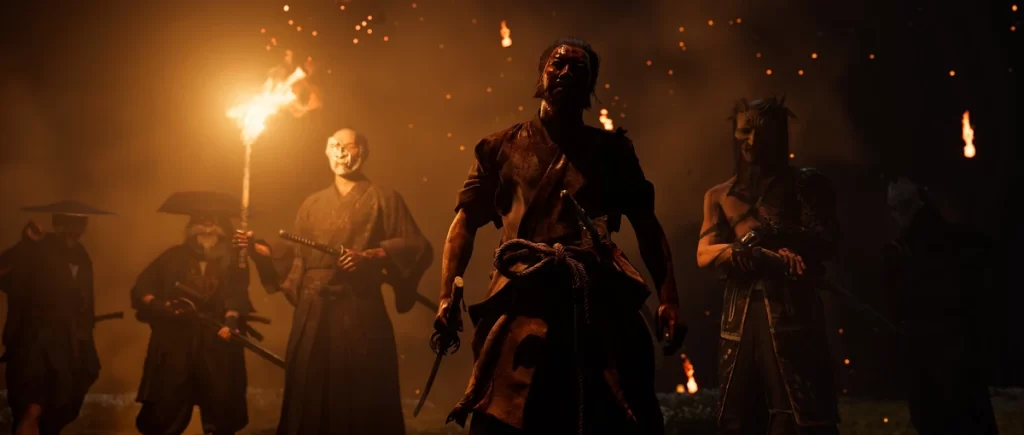
The Yōtei Six themselves are initially drawn as clear archetypes: the calculating Snake, the brutal Oni, the elusive Kitsune, Saito’s sons known as the Spider and the Dragon, and Saito himself.
Some of them get enough screen time and side material to feel like people rather than themed boss fights; others remain strong silhouettes with a handful of motives sketched in. The narrative is at its best when it narrows the focus to Atsu’s relationships with a small circle of allies and accomplices, particularly figures like Oyuki, Jubei and Kiku, whose fates intersect with both her past and Saito’s brutal present.
Sucker Punch leans harder than before into player choice in how you progress. After the opening sequence, you can pursue most members of the Yōtei Six in different orders. The world reacts to who has fallen and who remains: patrols shift, rumours at inns change, and some side quests resolve differently depending on which lieutenants are still breathing. Certain encounters and flashbacks are fixed, so everyone still experiences the same narrative spine, but the route you carve through Ezo shapes the pacing and tone. Pursuing Saito’s inner circle with minimal detours produces a tighter, almost linear path. Letting every rumour, bounty and personal tale pull you off course stretches Atsu’s quest into something more fragmented and melancholic.
That flexibility comes with the usual open-world trade-offs. The central story hits some superb highs, particularly in the prologue, mid-game revelations and the final stretch, but it is easy to blunt that momentum if you insist on clearing every marker between major beats. Some supporting villains never quite escape their archetypes.
A handful of late-game emotional turns land harder if you have followed specific side threads and can feel a little abrupt if you have not. Even so, Atsu is a strong enough protagonist to hold the whole structure together. Her journey is more intimate, more openly angry and more willing to flirt with outright horror than Jin’s, and that tonal shift suits the setting and the passage of time.
Gameplay
Moment to moment, Ghost of Yōtei builds directly on Tsushima’s foundation: third-person movement, open regions, a blend of stealth and confrontation, and a light layer of progression via gear, techniques and charms. The most significant change is in how combat is framed. Where Tsushima revolved around stances, Yōtei centres combat around weapons and a new counter-focused system.
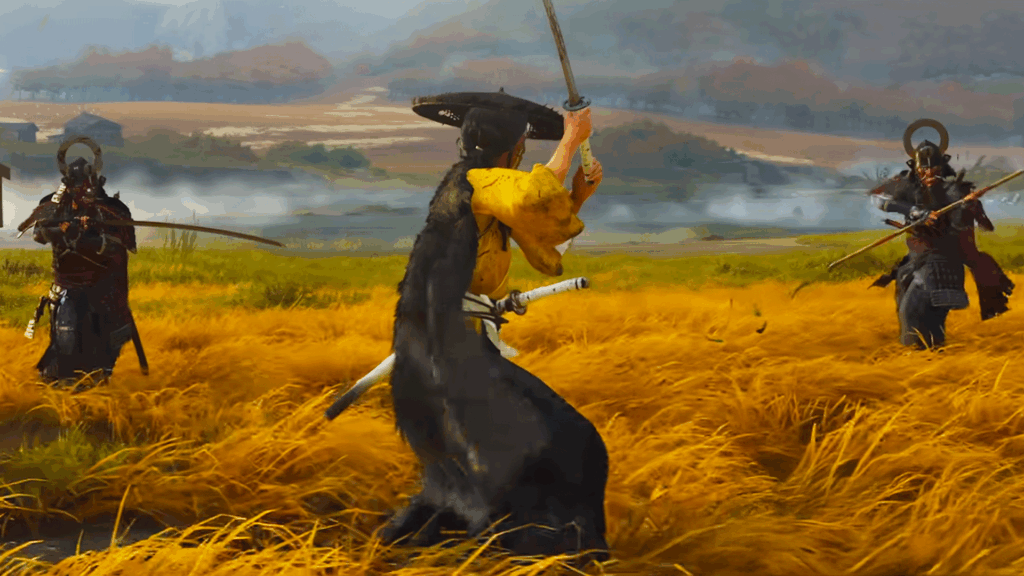
Atsu begins with a single katana, and the feel of that blade will be immediately familiar to returning players: fast slashes, clean parries, deadly ripostes if your timing is good. As the story advances, she expands that arsenal with a yari spear, a heavy ōdachi, a kusarigama and eventually the ability to dual-wield swords. Each weapon has its own timing, reach, strengths and weaknesses. Enemies telegraph different attack types with clear visual cues, and you are encouraged to switch not just for damage numbers but to answer intent.
Broad, sweeping strikes are safest to meet with the katana’s classic parry and counter. Linear thrusts are better handled by planting the spear and turning defence into a sweep. Slow, crushing overhead blows can be absorbed and reversed with the ōdachi, which chunks through armour and shields. The kusarigama excels at hooking shields, tangling legs and creating openings in a crowd. Dual-wielding trades safety for aggression, letting you shred staggered foes before they can recover. Instead of memorising which stance breaks which weapon, you are reading attack tells and choosing the right tool on the fly.
That sounds intricate, but it feels like a natural evolution of what Tsushima started. Early encounters restrict enemy variety and layer the system in gently. Tutorials and generous slowdown support you as you learn the rhythms.
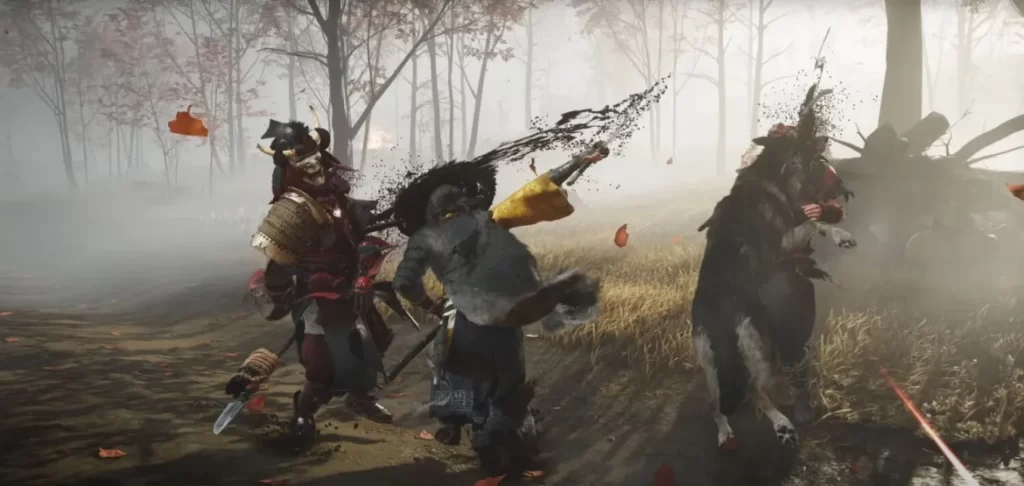
Later, mixed groups of ronin, spearmen, shield-bearers, archers and elite foes force you to constantly reassess positioning, options and priorities. When it works, combat has a brutal, expressive flow: closing the distance with a dodge, swapping to the appropriate weapon, catching an attack at just the right moment and turning it into a dismembering counter or a shove into a campfire.
Stealth remains a parallel route rather than a secondary concern. Atsu can crouch in pampas grass, use rooftops, ledges and the grappling hook to control elevation, and chain assassinations if she plans well. Enemies are a little quicker than Tsushima’s to investigate lost comrades and suspicious noises, and vision cones feel less forgiving. That nudges stealth into a more deliberate space. You can still clear entire camps without being seen, but sloppy play is punished more swiftly and recovery often involves committing fully to open combat.
Ranged options expand alongside melee. The hankyu and yumi bows return, with unlockable skills that emphasise quick target switching and satisfying multi-headshot opportunities. Tanegashima and tanzutsu matchlock weapons give you limited but powerful ways to delete a priority target at range, at the cost of noise and attention. Throwables like kunai, smoke bombs and explosives complete the toolkit, and the control scheme does a decent job of keeping all of this accessible without turning the pad into a finger-twister.
Outside combat, Atsu can establish camps. These serve as rest points where she can restore health and spirit, cook simple meals for short-term buffs, craft ammunition and interact with certain allies between main missions. Camps slot neatly into the game’s rhythm. Ride hard until resources and focus run low, make camp to reset and chat, then plan the next push into hostile territory.
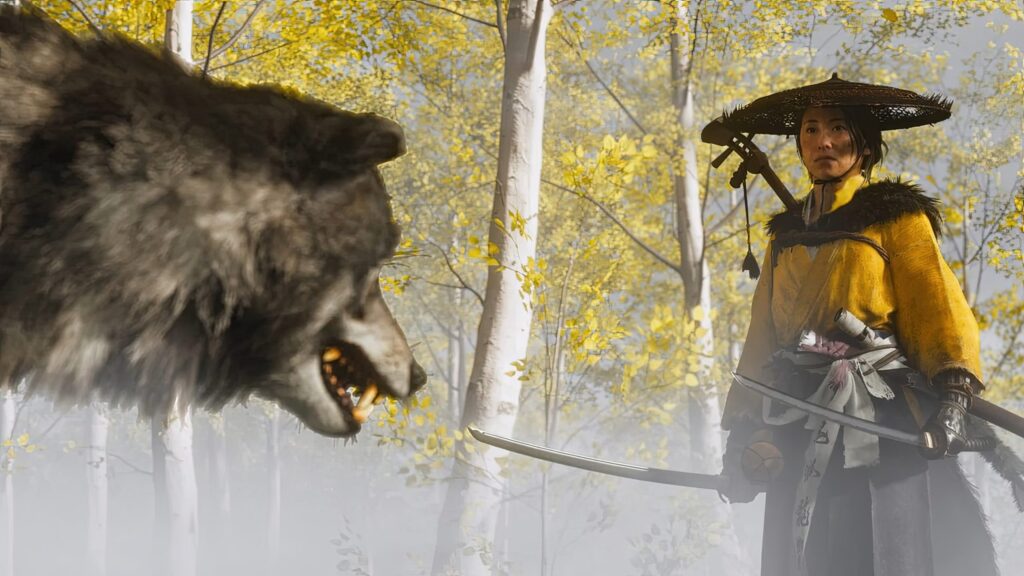
The open world wraps around this core. Exploration is still guided not by a cluttered HUD but by the guiding wind, which can be called with a touchpad swipe or reshaped by playing the shamisen. Foxes dart out of the undergrowth and lead you to shrines where new charms can be earned. Hot springs offer quiet moments of reflection and permanent health boosts. Bamboo stands test your reflexes and reward stamina. Dynamic weather and time-of-day transitions help keep familiar routes interesting; one ride across a valley at dawn, in clear air, can feel very different to the same route under heavy snowfall or beneath shifting aurora.
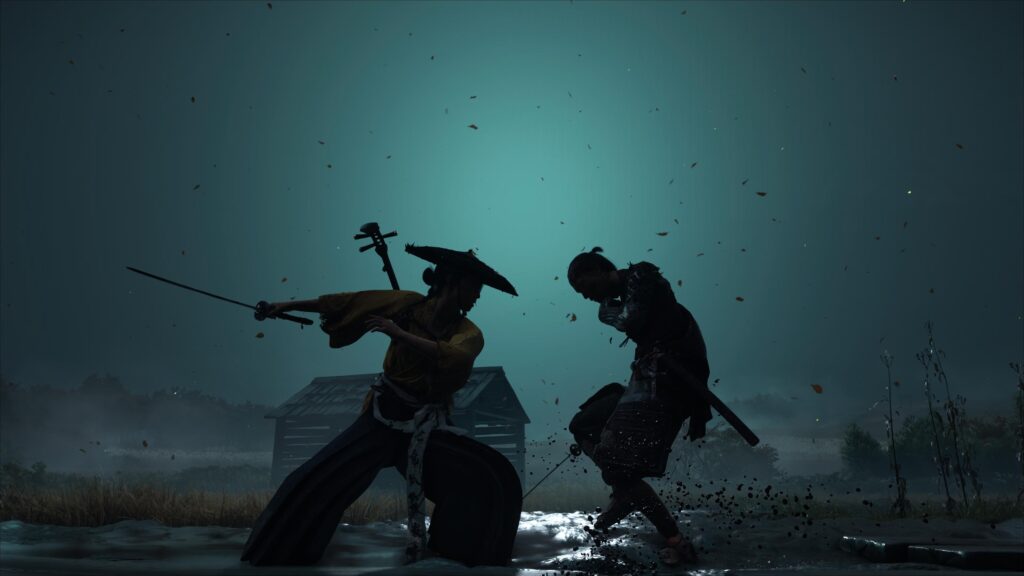
New activities sit comfortably alongside returning ones. Sumi-e brush painting replaces haiku composition, giving Atsu stiller, more introspective moments. Gambling at zeni hajiki tables offers a low-key diversion in inns and villages.
Bounty hunting quests and weapon mastery challenges add more structure for those who want to be guided rather than simply wander. Some side missions are tightly written character pieces that loop back into the main plot or Atsu’s past; a few are more perfunctory errands. Taken as a whole, the world feels dense without being suffocating, though players who insist on completing everything before pushing the story forward will feel the familiar fatigue of any busy open-world map.
Difficulty is flexible. You can adjust base challenge and various assist settings independently, softening timing windows or clarifying UI cues without entirely neutering the game. Armour sets and charms support distinct playstyles, whether that is high-risk, high-reward counterplay, archery from a distance, stealthy attrition or relentless aggression. The weapon counter system nudges you towards a balanced build, but it is possible to lean heavily into one approach and still succeed, especially on mid-range settings.
Yōtei also introduces three cinematic modes that double as tone control. Kurosawa mode brings back stark black-and-white visuals and a grainier soundscape that evokes mid-century samurai cinema. Miike mode tightens the camera, heightens gore and grime, and makes battles feel more claustrophobic and intense. Watanabe mode relaxes colour grading and overlays lo-fi adjacent music during exploration, giving long rides and quiet moments a very different mood. Each mode is optional and trade-offs in visibility or readability mean they are not ideal for all situations, but they are thoughtfully implemented and give the game a welcome range of flavours.
Multiplayer, for now, remains prospective. Ghost of Yōtei: Legends, a follow-up to Tsushima’s co-op mode, has been announced as a free update with two-player story missions and four-player survival maps against horror-inflected versions of the Yōtei Six and other mythological foes. At launch, however, the focus is entirely on single-player, and that narrower scope shows in how tightly the main systems and narrative beats are interwoven.
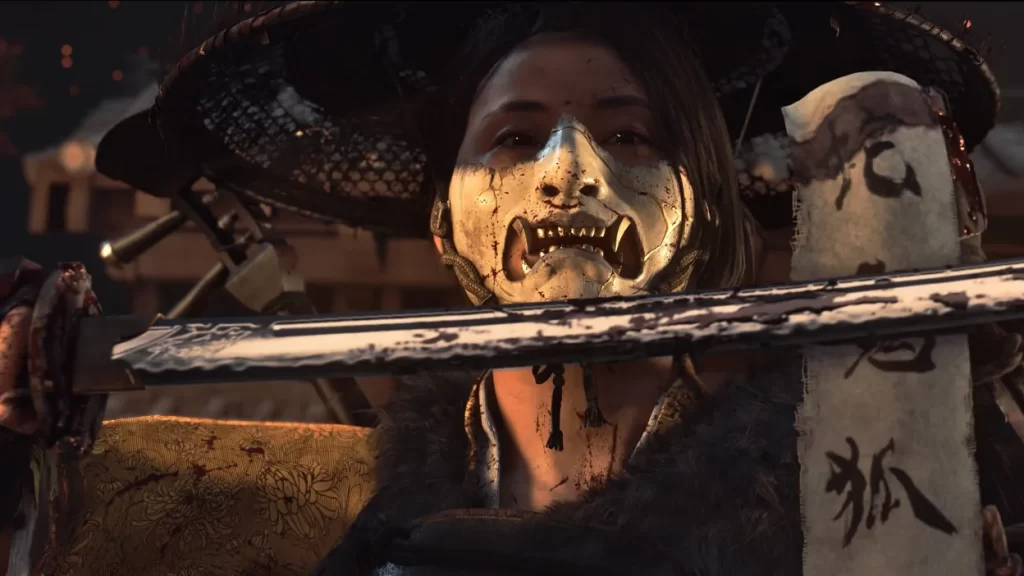
Audio
Much of Yōtei’s impact comes from sound. The world is alive with small details: grasses rustling in the wind, wolves calling in the distance, prayer flags snapping under sudden gusts, the crunch of fresh snow underfoot. Weather changes are not only visible; you can hear rain rattling on Atsu’s hat and armour, hear how a rising wind masks or reveals enemy movements. The audio mix makes simply standing still and listening in a forest, on a cliff path or outside a village surprisingly rewarding.
The score, by Toma Otowa, blends traditional Japanese instruments with more modern textures. Low drums, shamisen and shakuhachi flutes underscore duels, while more melancholic pieces follow Atsu through moments of quiet or reflection with her allies. Watanabe mode gives the soundtrack room to experiment, bringing in laid-back beats for exploration that recall the energy of shows like Samurai Champloo without feeling out of place. It’s a soundtrack that supports the drama rather than overwhelming it.
Combat audio is both dramatic and functional. Each weapon sounds distinct: the katana’s clean cuts, the heavier drag of an ōdachi swing, the whistle of a spear thrust, the metallic rasp of a kusarigama’s chain. Successful parries are punctuated by crisp audio cues that make timing feel more intuitive. Arrows have a threatening hiss as they pass near, and firearm reports are rare but thunderously loud when they do occur.
Voice acting anchors the story. Atsu’s performance balances menace and vulnerability, letting her shift from dry humour to genuine anger or grief without losing coherence. Key members of her “wolf pack” are equally well drawn. Some minor quest givers and incidental NPCs come off flatter, especially in the English track, but the main cast is strong in both languages. Lip-syncing is tailored to Japanese, as you would expect, though English holds up well.
This is also one of the better adverts for the DualSense. Haptic feedback reflects terrain, weather and impact: the granular sensation of moving through deep snow, the patter of rain, the impact of steel on steel, the judder of a blocked heavy attack. Adaptive triggers stiffen when drawing a bow and snap under firearm recoil. The touchpad and built-in speaker are used more than tokenistically. Painting sumi-e scenes or directing the wind via the shamisen feels satisfying in the hands, and small sounds-from Atsu’s breathing to the rasp of a blade being sheathed-relayed through the controller help tie you more closely to her perspective.
With a decent headset, 3D audio does at least as much work as the on-screen HUD in keeping you oriented. The direction of distant patrols, animals, streams and village chatter is easy to read, and that in turn makes it easier to rely on environmental cues instead of staring at an on-screen compass.
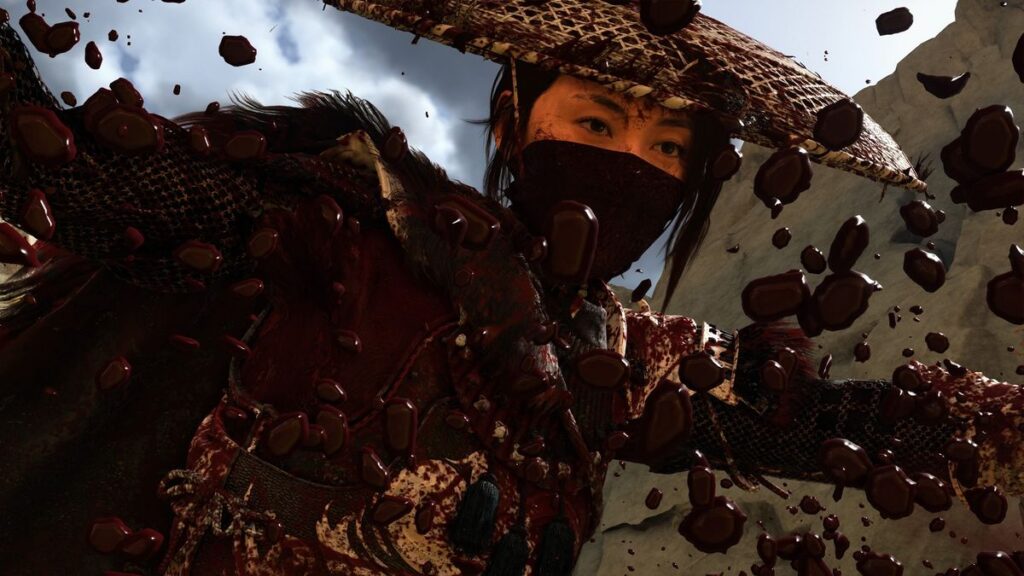
Performance
As a native PS5 title, Ghost of Yōtei offers multiple graphics modes, and with PS5 Pro now in the mix there is a clear split in how the game behaves on each console.
On a standard PlayStation 5 there are three primary options. The first is a quality-focused mode that prioritises resolution and image stability at 30 frames per second. Internal resolution targets are just under full 4K, and the result is a very sharp picture with dense foliage, detailed distant mountains and stable volumetric effects. For people who play slowly, treat the game like an interactive film and are less sensitive to frame rate, this mode has obvious appeal.
Alongside that sits a performance mode, which drops internal resolution down towards 1080p to reach a 60fps target. The image is noticeably softer, especially on large 4K displays, and fine geometry can shimmer a little as you move. In return, combat feels wonderfully responsive, camera movement is smoother and horse riding across open fields and forest tracks has a flow that flatters the game’s traversal and counter-driven fighting system. For many this will be the default choice.
The third main mode on base hardware introduces ray tracing. It retains a 30fps target but enables ray-traced global illumination and improved shadowing, with internal resolution sitting between the two other modes. The upgrades are most obvious in interiors, dense woodland and scenes lit by lanterns, fires or low sun, where indirect light and deeper shadow gradients add a lot to the atmosphere. On a standard PS5 this is the best-looking mode in static screenshots, though some will still prefer the feel of 60fps in motion and happily give up the extra lighting fidelity.
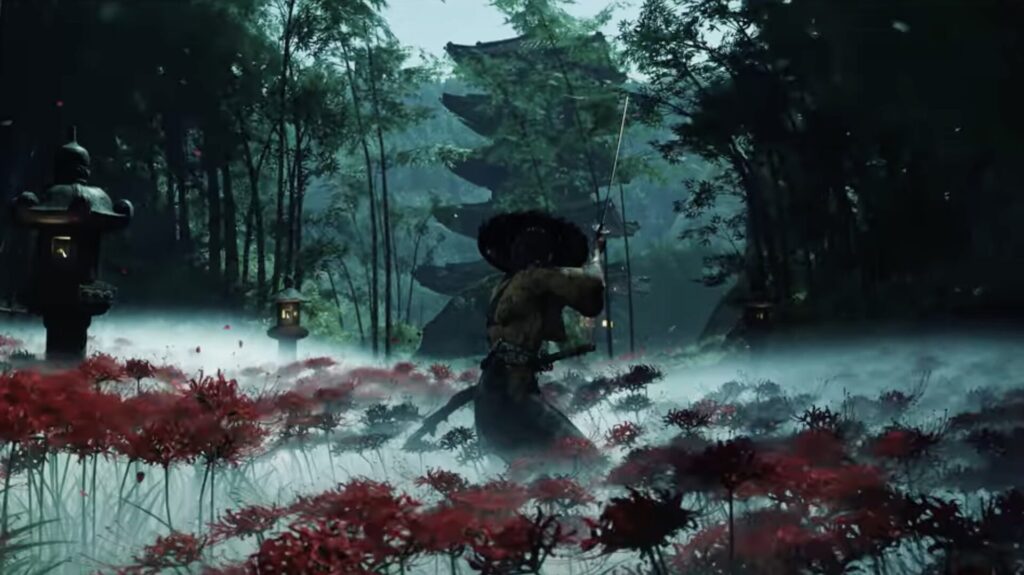
On PS5 Pro, all three of those modes benefit from higher internal resolutions and more stable image quality, but the more interesting change is the addition of a fourth option built specifically for the newer console. The Pro-only ray-traced performance mode combines 60fps gameplay with ray-traced lighting, leaning on Sony’s upscaling to keep the image sharp despite a lower native resolution.
In practice, it offers a very compelling compromise: combat and traversal feel as fluid as in the standard performance mode, while reflections, shadows and indirect light behave more like they do in the 30fps ray tracing mode on base hardware. There are occasional artefacts if you go hunting for them, but it is easy to see why many PS5 Pro owners describe this as the definitive way to play.
Across both consoles and all modes, loading times are short. Fast travel is close to instant, flashbacks slide in and out without obvious loading breaks, and respawns after failure are quick enough that tough encounters invite one more attempt. Streaming as you gallop across Ezo’s larger regions is generally solid. You will occasionally catch a pop-in if you are really looking for it, but it is rare and fleeting.
Technically, Yōtei is not flawless if you probe its edges. Some background geometry and incidental props are fairly simple once you get close, and in stark midday light a few scenes can look flatter than the dramatic lighting elsewhere suggests. Overall stability, however, is strong. Extended sessions do not reveal glaring memory or performance issues, and there is no widespread reporting of broken quests or progress-blocking bugs.
Verdict
Ghost of Yōtei is a confident, often beautiful continuation of Sucker Punch’s samurai saga. It reuses the bones of Ghost of Tsushima where that still makes sense-the guiding wind, fox dens, hot springs and understated HUD and lays a darker, more personal story over the top. Atsu is a compelling lead whose anger and trauma give the familiar revenge structure some real bite. The expanded arsenal and weapon-based counter system make fights feel more expressive and deliberate. Ezo, with its dynamic weather, mountain ascents and frozen forests, is a memorable place to inhabit.
The caveats are familiar too. The open world still leans on camps to clear, icons to tick and side missions that range from quietly affecting to entirely forgettable. If you let yourself be distracted by everything, the pace of the central story can sag. Look too closely at certain assets and you can see the seams. None of that, though, significantly undermines what the game gets right. Moment to moment, drawing steel, reading an opponent’s intentions and punishing them with the right weapon remains gripping. The use of DualSense and 3D audio is among the best on the platform. Performance options on both PS5 and PS5 Pro give you plenty of control over how you want it to look and feel.
Taken on its own terms, Ghost of Yōtei is a worthy successor to Tsushima and yet another of the PS5 catalogue’s standout exclusives, regardless of whether it’s played on the original PlayStation 5 or enjoying the Pro’s visual embellishments – it’s nothing short of a masterpiece.


