
-
Story
-
Gameplay
-
Audio
Summary
Pros
- Curated tour through multiple eras of open-wheel racing
- Decent handling that balances accessibility and nuance
- Clean, stylish presentation of F1
Cons
- No official drivers, teams or circuits
- Career structure fairly light
Pedal to the Metal
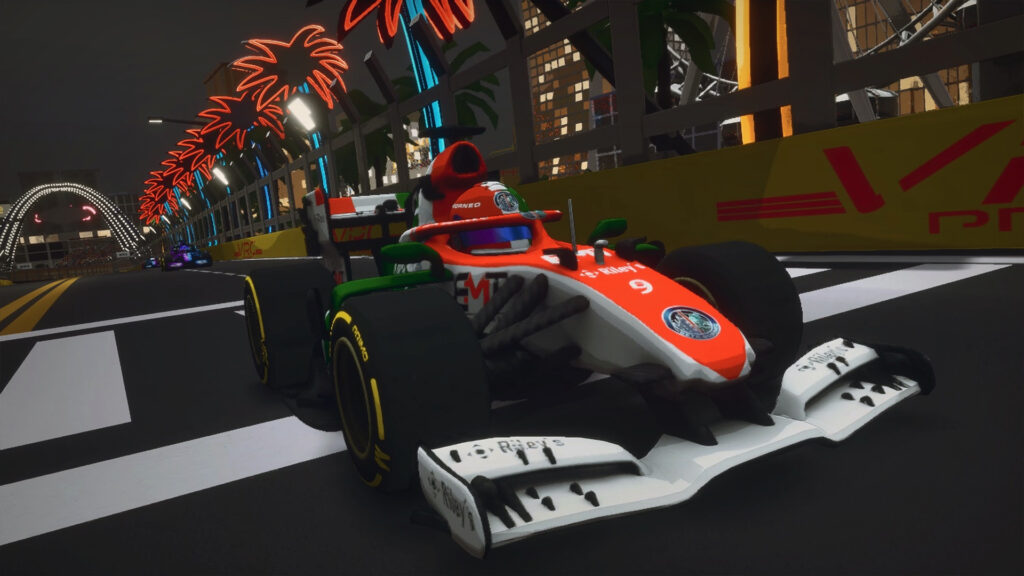
Formula Legends is the product of Italian indie studio 3DClouds, turning its focus from family-friendly fare (if you’ve driven a virtual Hot Wheels car or Paw Patrol vehicle in the past few years, they likely had something to do with it) to a more focused love letter to open-wheel motorsport.
It presents itself as a sim-cade tribute to the history of Formula-style racing, steering clear of official licences in favour of stylised cars and circuits seen from a slightly elevated camera, capturing the feel of carving clean laps through decades of ever-evolving machinery.
Story
Formula Legends uses a loose ‘career’ framing in which you act as an unnamed driver stepping through different eras. Each chapter focuses on a particular decade, introduced by short text snippets that highlight key themes: the early days of minimal aerodynamics, the arrival of wings and turbo boosts, and the march towards hybrid power and ever-greater safety measures.
That framing does a fabulous job of giving context to both handling and circuit changes, all of which feel distinct and evocative of steering hurtling pieces of metal at breakneck speed.
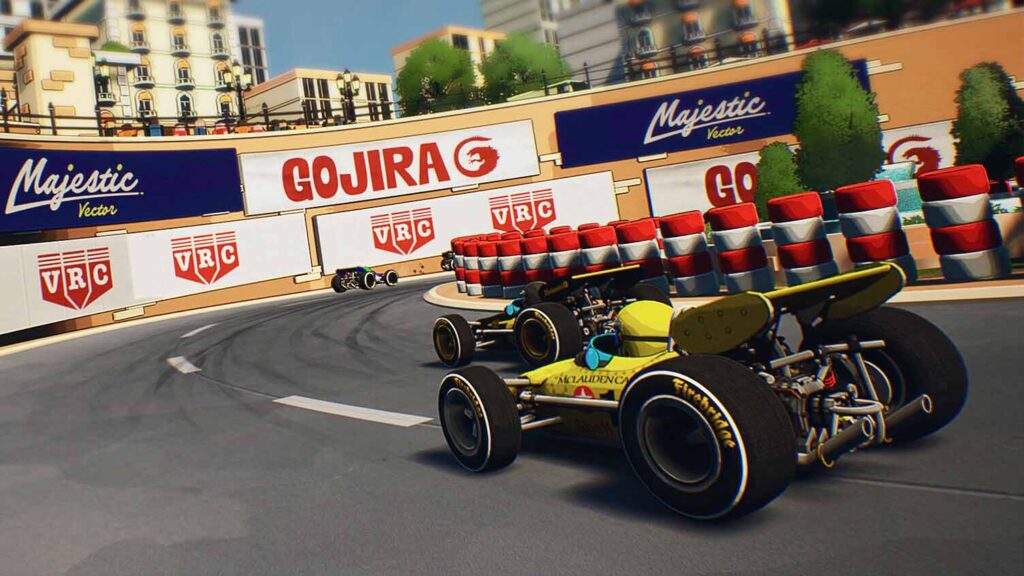
Early events place you in cigar-shaped machines with limited grip and plenty of body roll, while later chapters hand you high-downforce cars that can grip the tarmac at alarming rates.
Optional challenges, such as era-specific time trials or overtaking scenarios, slot between championship races to break up the flow.
What you get is a carefully crafted tour through 3DClouds’ interpretation of the sport’s evolution, told gracefully through how each decade’s cars and tracks feel.
Gameplay
Handling is where Formula Legends earns its place on the grid. Viewed from a top-down or high-angled perspective, cars respond crisply but predictably. The steering has enough weight that changes of direction feel meaningful, yet the game never tips into twitchiness – the result of post-launch refinement and very vocal fan feedback.
Braking points still matter, apexes still count, and you quickly learn which corners invite bravery and which will punish overconfidence.
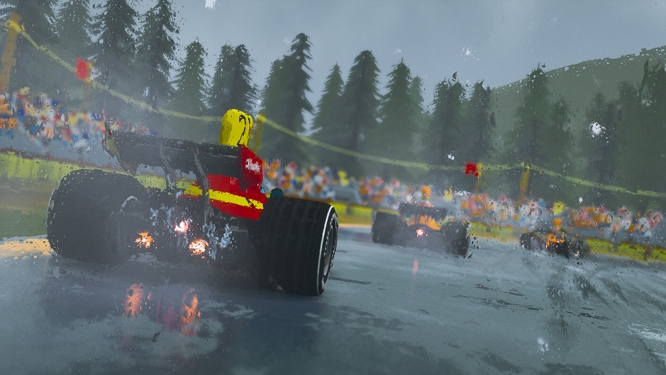
Each era feels genuinely distinct. Older cars squirm under acceleration and demand respect on corner exit, especially in the wet.
As aerodynamic grip ramps up in later years, you can brake later and carry far more speed through sweeping curves, but you are punished if you ride kerbs too aggressively. The overall model sits firmly in sim-cade territory: the fundamentals of good driving are rewarded, but you are not wrestling with complex setup menus or tweaking the minutiae of tyre models.
Assists are available for steering, braking and traction, making the game friendly to newcomers. Turn them off, and there is enough nuance to keep more experienced players engaged, particularly when chasing leaderboards or shaving tenths off a personal best. The onboard cameras are present for a cockpit view of the action, but the game is clearly designed around its elevated view, which remains the cleanest way to read the road ahead.
Circuits are fictional yet clearly inspired by real-world venues in countries such as Britain, Italy, Canada and Japan, along with more modern street-style layouts in city and desert settings. Layouts evolve as you move through eras, mirroring how real tracks gain chicanes, safety features and new sections over time. That evolution gives revisits a pleasant sense of déjà vu: your old braking marker might still be roughly right, but the corner beyond it has changed.
Similarly, lightly tweaked names and liveries will definitely draw a smirk from Formula 1 aficionados, as you overtake ‘Mike Shoemaker’ in his trademark ‘Ferenzo’.
It also captures the tactical element of weather conditions, where the game can dynamically turn from a sunny day to a torrential downpour, with shrewd tyre changes and cautious driving making all the difference between a win and crashing out.
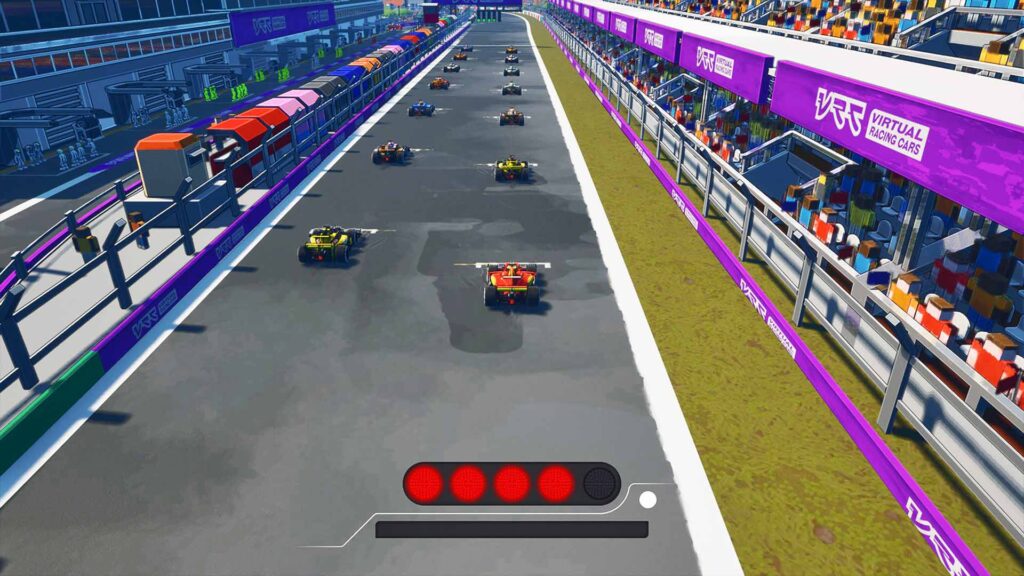
Multiplayer, whether online or on the sofa, benefits from the clarity of the viewpoint. You can see rivals’ lines into corners and plan your own moves with more information than a traditional low camera usually provides. Contact is light and rarely catastrophic, which suits the balanced tone between arcade action and racing realism.
Audio
Engine sound does a lot to sell the variety of vehicles – early cars emit urgent, mechanical howls, while later turbo and hybrid machines add deeper growls and more complex layers of whine and whoosh. It is not a forensic recreation of specific engines, but each has a distinct audio character, which helps sell the sense of time passing even if you are not staring at the HUD.
Music takes a back seat during races, surfacing more in menus and interludes. When it does appear, it tends to be understated and in keeping with the respectful, almost documentary tone 3DClouds is going for. The game keeps licensed music out of the way and encourages you to focus on the cars themselves.
Effects for kerb strikes, off-track excursions, and light contact are reserved but informative. You feel and hear when you have pushed a little too far, without every mistake being accompanied by theatrical crunches.
Performance
Formula Legends’ clean art style pays dividends on Series X. Cars have a slightly boxy, stylised look that reads well from above, with liveries and shapes that communicate their era at a glance. Trackside scenery is simplified but attractive, and the colour palette is bold without becoming garish. The overall effect is closer to a detailed toy set than a photo-real broadcast.
Performance is strong. Frame rates are stable in single player and hold up well in busy grids. Weather variations and time-of-day changes do not introduce noticeable stutter, and load times between sessions are short. The game is available on a wide range of platforms, but the Series X version takes advantage of the hardware mainly through resolution, silky gameplay and stability rather than lavish effects.
Input response feels tight, which is especially important when you are operating at the limit of grip in late-game machinery. There are no obvious hiccups or latency spikes to blame when you miss an apex.
Verdict
Formula Legends on Xbox Series X is a thoughtfully pitched – and keenly priced at under £20 – tribute to the fastest sport on four wheels, opting for clarity and capturing the feel over licences and spectacle. 3DClouds uses the top-down perspective and time-hopping structure to emphasise the rhythm of a good lap and the way cars have changed across decades, and in that it largely succeeds.
Handling is satisfying, the circuits are well judged, and the historical framing gives the campaign a pleasant sense of progression.
Limitations are easy to list: there are no real-world teams or drivers, the career mode is lean compared with heavyweight sims, and cockpit-view purists may never fully click with the default camera. If you can live with those boundaries, you will find a stylish, engaging racer that earns its place alongside more serious titles as a complementary experience.
Where you place it on your star chart will come down to how much you value feel over official branding, but it deserves to be on the podium of your purchase list.


